


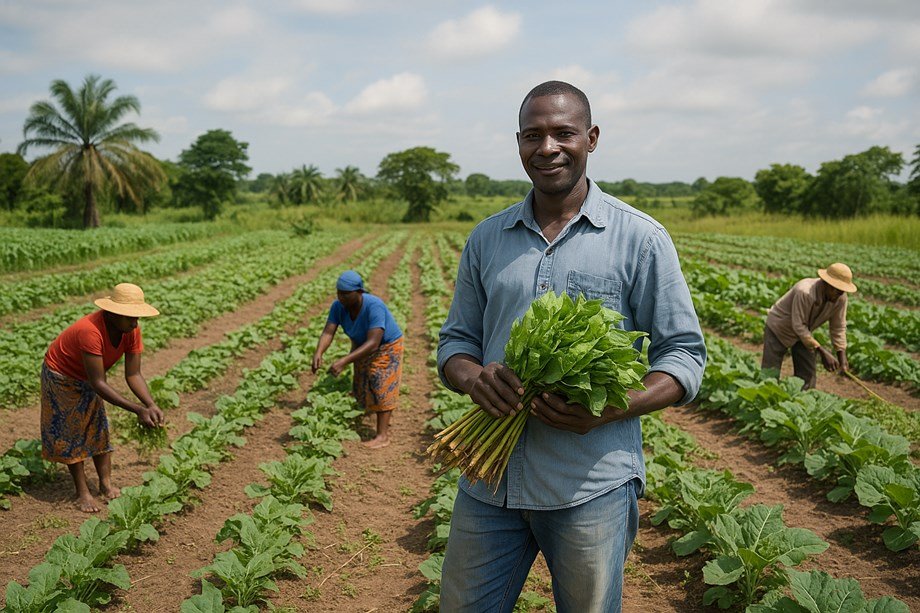
The African Development Bank Group (AfDB) has approved a $211.4 million financing package for an ambitious agricultural transformation project in eastern Angola. This is one of the most significant investments in this country’s food system in decades. The Eastern Region Agricultural Value Chain Development Project aims to dramatically increase agricultural production, expand agro-processing capacity and create thousands of jobs across a region long constrained by lack of investment, conflict and geographic isolation.
The initiative positions Angola’s eastern province as a major future source of food supplies for domestic and regional markets, leveraging the region’s rich agro-ecological potential and its strategic location along the Lobito Corridor, an important trade and transport route linking Angola with Zambia, the Democratic Republic of the Congo (DRC) and global export markets.
Major investments to strengthen food security and create jobs
The project is expected to create 7,500 direct jobs, half of which will go to women and one third to youth, benefiting 1.2 million people in six provinces: Lunda Norte, Lunda Sul, Mojico, Mojico Leste, Cuando and Cubango. This initiative brings together multiple funding sources, including:
The Angolan government will also provide a parallel loan of $100 million, covering grants, local staffing, logistics and support from existing credit facilities.
Unlocking the potential of untapped agricultural frontiers
Although Angola has 35 million hectares of arable land, only 17% of the area is under cultivation, forcing the country to import billions of dollars worth of food each year. Although the eastern region is blessed with abundant water, fertile soil, and a suitable climate, it remains underdeveloped due to poor infrastructure, limited investment, and the effects of long-term conflicts.
Pietro Toigo, AfDB Country Manager for Angola and São Tomé and Príncipe, highlighted the project’s innovative vision:
“This project is key to transforming the Lobito Corridor from a logistics route into a development engine. By combining climate-smart technology, mechanization and youth empowerment, we are investing in Angola’s food sovereignty and long-term prosperity.”
Three strategic elements for transforming food production
The project will activate a comprehensive set of interventions to strengthen agricultural production, connect farmers to markets, and build resilience to climate change.
1. Large-scale agricultural productivity improvements
This component focuses on scaling up production using the latest climate-resilient technologies.
Deploying high-yielding, climate-resilient seeds through TAAT (African Agricultural Transformation Technologies)
Rehabilitation of 2,500 hectares of irrigation infrastructure
Development of 150,000 hectares of new agricultural land – opening up vast areas for grain and rice production
Establishing 3,000 farmer field schools to train smallholder farmers through hands-on, hands-on learning
The six agribusiness centers will support processing, value addition, entrepreneurship and provide shared machinery, targeting youth and women-led businesses.
2. Improving market access and rural infrastructure
A total of 400 km of climate-resilient feeder roads will be rehabilitated, connecting remote communities with markets, processing centers and export routes along the Lobito Corridor.
This infrastructure reduces transportation costs, minimizes post-harvest losses, and increases farmers’ profitability. With tightly integrated logistics, Angola’s eastern region has the potential to become a major agricultural supplier to the Southern African Development Community (SADC).
3. Expanding fertilizer access and agricultural technology
Fertilizer use in Angola remains extremely low, at 7.9 kg per hectare, well below regional and global averages. To transform soil productivity, the project has partnered with the African Fertilizer Financing Mechanism (AFFM) to introduce a partial credit guarantee facility that will enable the delivery of 360,000 tonnes of fertilizer over the life of the project.
Mechanization is also a big focus. The six mechanization centers will provide affordable machinery services to 900,000 farmers, half of whom are women. The training program equips young people with the following skills:
Neeraj Vij, AfDB Regional Sector Manager, emphasized the comprehensive approach:
“By targeting women and youth, we can ensure that economic transformation reaches those who need it most. This is not just about job creation, it’s about wealth creation and community empowerment.”
Lobito Corridor: A game-changer for regional trade
Four of the six beneficiary states are located within the rapidly expanding Lobito Corridor Economic Zone, a multi-country initiative with Angola, Democratic Republic of the Congo and Zambia to open efficient access to the Atlantic Ocean.
This agricultural project will help integrate rural communities into this new trade ecosystem. With improved infrastructure, Angola’s eastern provinces will:
Major supplier of staple foods to the SADC market
Exporter of processed agricultural products
Contributors to regional food security
This is the first AfDB-Italy partnership under the Mattei Plan specifically targeting the Lobito Development Zone.
Implementation and long-term impact
The project will be implemented from 2026 to 2031 under the Angola Ministry of Agriculture and Forestry, with close support from local authorities, agricultural organizations and private partners.
Key long-term outcomes include:
Increase in domestic food production
Reducing dependence on expensive food imports
Improving the income of small-scale farmers
Strengthening resilience to climate change
Expansion of regional agricultural trade
Job creation and opportunities for youth and women
Strengthening the rural economy along the Lobito Corridor
The Eastern Region Agricultural Value Chain Development Project will lay the foundations for a resilient, competitive and inclusive agricultural sector by addressing infrastructure gaps, increasing productivity and empowering people.
