


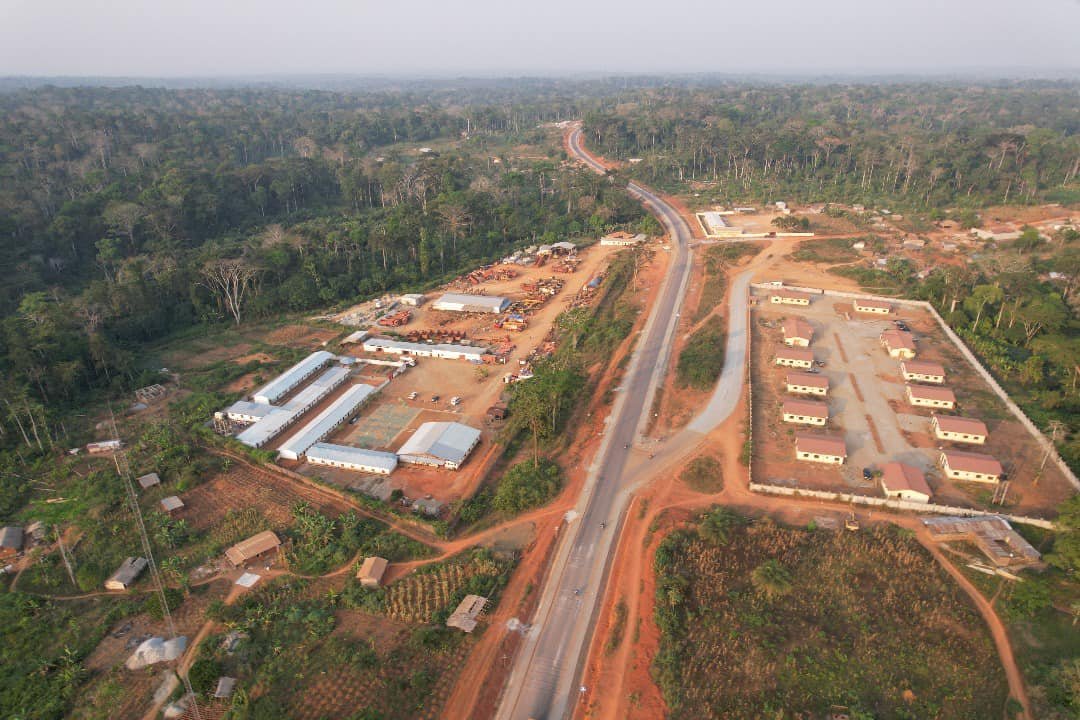
Cameroon’s Ministry of Public Works (MINTP) has invited bids until January 30th for the reconstruction of the 242km Ngaoundele-Garoua road located in Adamoua and the Northern Region.
The route is part of the 2,100km Douala-N’Djamena Corridor, which connects Douala, a port city in western Cameroon, with N’Djamena, the capital of neighboring Chad. This work is being carried out under the fourth phase of Cameroon’s Transport Sector Assistance Program (PAST).
The Ngaoundere-Garua section, built in the 1990s and serving as a junction in the corridor, has reached the end of its useful life and is in a dilapidated condition, resulting in excessive travel times and transaction costs.
The work is divided into five sections, one being the 50km Ngaoundere-Maran junction-Mbe cliff base, with a duration of 36 months. The route will take 24 months and cover 39km between Mbe Cliffs and Kerua Bridge. It will take 36 months to cover the 77km road from Kerua Bridge to Salah Bridge. A 56km route that spans 24 months from the Salar Bridge to the entrance to the village of Ouro Andre. It will take 24 months to cover the 56km road from the entrance to Ouro Andre village to Benouye Bridge.
The tender will be published on December 11, 2024 and can be viewed here.
Related works include the development of 15km of urban roads in the towns of Ngaoundere, Mbe, Gamba, Gouna and Ngong. Rehabilitation of 139km of roads to develop agro-pastoral basins in the northern region. and the rehabilitation of 163km of access roads to the cotton cultivation basin in the Adamua region.
The specific objectives of the Gaoundere-Garoua road project include opening up the production basin of the Adamaua Plateau. Reducing travel times and costs on the Douala-N’Djamena and Douala-Bangi corridors with the capital of the Central African Republic (CAR). Promoting the use of other means of transport, especially railways and rivers.
Source: AfDB Assessment Report, 2012
The total cost of the Ngaoundere-Garua road project is 340.7 million euros (351.2 million US dollars) and is targeted for completion by December 2030. The scheme is supported by the African Union and the Government of Cameroon, as well as the African Development Bank (AfDB), which approved financing for the scheme in December 2024 worth a total of €330 million.
The Corridor of Douala and N’Djamena is considered the most important in Cameroon. According to the World Bank, the corridor accounts for 35% of Cameroon’s GDP and is home to 35% and 20% of the populations of Cameroon and Chad, respectively.
“The rehabilitation of the most degraded section (of the corridor) between Ngaoundere and Garoua will help improve the performance of Cameroon’s road network to foster participation and private investment in the agro-industrial, transport and logistics sectors along the Douala-N’Djamena corridor, while facilitating cross-border trade,” said Serge Nguessan, AfDB Central Africa Director.
Previous PAST phase is in progress or nearing completion.
PAST 1 aims to provide an alternative access route to the Douala-N’Djamena corridor via Cameroon’s Central Plains, Center and Adamahua regions.
The works include the development of the 248.6 km Batchenga-Ntui-Yoko-Lena road, which is part of the government’s efforts to transport agricultural products from the Mbamu-Sanaga agricultural basin through the Yaounde-N’Djamena-Bangi, Yaounde-Gabon-Equatorial Guinea and Yaounde-Republic of Congo corridors to key consumption centers in the Central African Economic and Monetary Community (CEMAC) region.
Completion of the US$514.9 million project is targeted by December 2025.
The last two installments cover the renovation of the Yaounde-Bafoussam-Babajju route, which connects Cameroon’s southern and northern regions via the west, linking the Bamenda-Enugu (Nigeria) corridor and the Ngaoundere to Douala-N’Djamena corridor.
The US$505.9 million project was expected to be completed by December 2024.
PAST 3 covers the construction of a 365 km ring road that will form a ring road across five governorates in the North West Region and include several connections to the Nigerian border.
The US$247.8 million project is expected to be completed by December 2026.
Top photo: Cameroon roads (Source: Facebook @ MINTP)
