


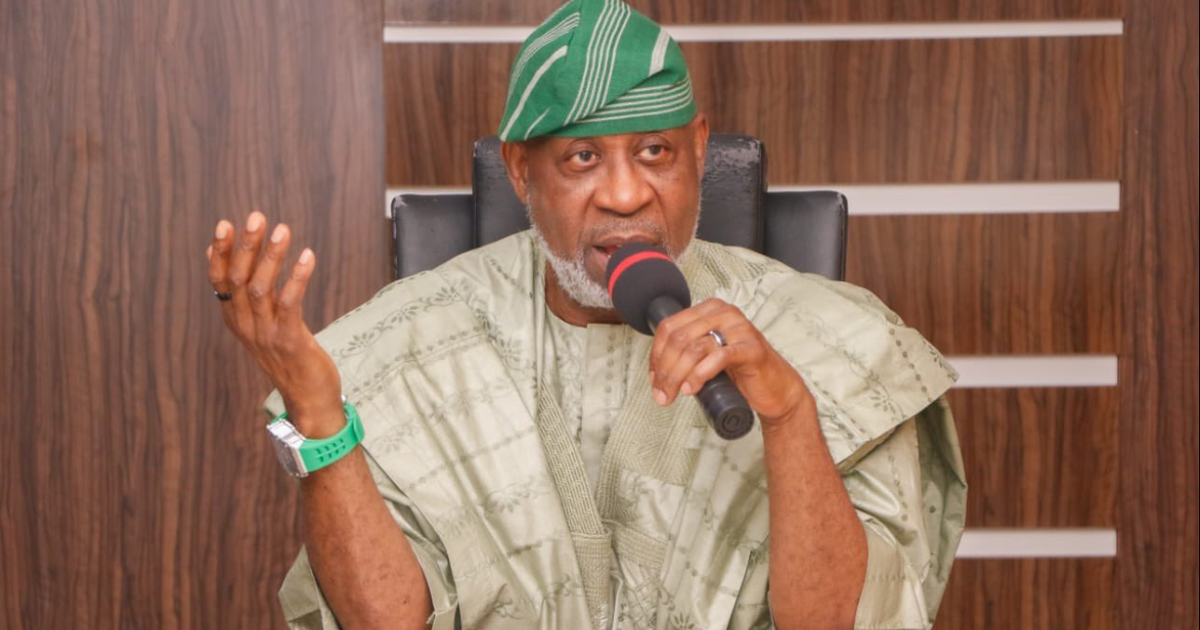
The Minister of Solid Minerals Development, Dele Arake, made this known during a panel session at the Powering Africa Summit in Washington DC. There, policymakers and investors discussed Africa’s role in meeting growing global demand for minerals used in electric vehicles, batteries and renewable energy technologies.
Speaking during a panel discussion entitled “Africa’s Critical Minerals: Meeting Global Demand,” Arake said recent reforms in Nigeria’s mining sector, including digitizing licensing, improving regulations and strengthening security, are helping to restore investor confidence and attract new capital.
He said the government is also moving to combat illegal mining through a special enforcement unit known as the Mines Sheriff, which has arrested more than 350 suspects in the past year and more than 150 cases are already in court.
“We have successfully de-risked and cleaned up the mining environment, making it an environment conducive to foreign direct investment,” Arake said.
Promoting regional energy and mining corridors
Beyond domestic reforms, Nigeria is promoting broader African cooperation to strengthen the continent’s role in global mineral supply chains.
Mr. Arak called on U.S. and African governments to support the development of regional energy hubs and industrial corridors to power cross-border mining operations and local processing.
He pointed to existing infrastructure initiatives such as the Lobito Corridor as models that can be replicated across the continent.
He said similar corridors could be developed along the Lagos-Abidjan Corridor in West Africa and the Walvis Bay Corridor in Southern Africa to support mining, manufacturing and regional trade.
Sharing energy infrastructure, including large-scale power projects, could help multiple countries in the corridor, reduce costs and encourage local mineral processing rather than exporting raw materials, he said.
“The development of three to five such corridors in Africa would significantly increase industrialization across the continent, creating win-win outcomes for both Africa and the West,” he said.
Reforms aimed at diversifying the Nigerian economy
Nigeria has long relied on oil for government revenue, but instability in the oil sector and declining production have prompted authorities to accelerate efforts to diversify the economy.
Although mining accounts for less than 1% of GDP, it is a priority sector because of Nigeria’s reserves of lithium, gold, tin and other important minerals.
Arak said reforms introduced over the past two and a half years now ensure the safe survival of mining licenses, a key demand from investors who need long-term stability before committing capital to exploration and processing projects.
To further attract investment, the government is waiving taxes on imported mining equipment, allowing full repatriation of profits excluding taxes and royalties, and expanding access to certified geological data to reduce exploration risks.
US lenders are interested but warn about stability
At the same event, Sarah Witten of the U.S. Export-Import Bank said U.S. financial institutions are ready to support mining projects in Africa, especially those related to the energy transition, but stressed that political stability and consistent policies remain important.
“U.S. banks stand ready to support the project, but our role is to facilitate and free up private sector capital,” she said.
The discussion also included government officials and executives from mining investment and technology companies, reflecting intensifying international competition for access to Africa’s mineral resources as countries compete to secure the raw materials needed for clean energy technologies.
