



Africa makes its global IPO debut. Pan-African e-commerce company Jumia ($1 billion market capitalization) began live trading on the New York Stock Exchange last week.
With this initial public offering, Jumia becomes the first startup operating in Africa to be listed on a major global exchange.
This raises hopes for unicorns and IPOs to create the first wave of startups on the continent. However, unlike other markets, large listings and nine-figure valuations may remain rare in Africa.
Venture emergence and startup acquisitions are likely to be more important factors than IPOs in the success of Africa’s nascent startups.
I will explain the reason in detail. First, a quick explanation.
A primer on African technology
Although not everyone may realize it, Africa does have a burgeoning tech scene. Measured in monetary terms, it is paltry by the standards of Shenzhen and Silicon Valley.
tech crunch event
san francisco
|
October 13-15, 2026
But when you look at the size and year-on-year growth of VCs, start-up creations and tech hubs, it’s one of the fastest growing tech markets in the world.
In terms of building blocks, Africa has 442 active tech hubs, accelerators and incubators (according to GSMA figures).
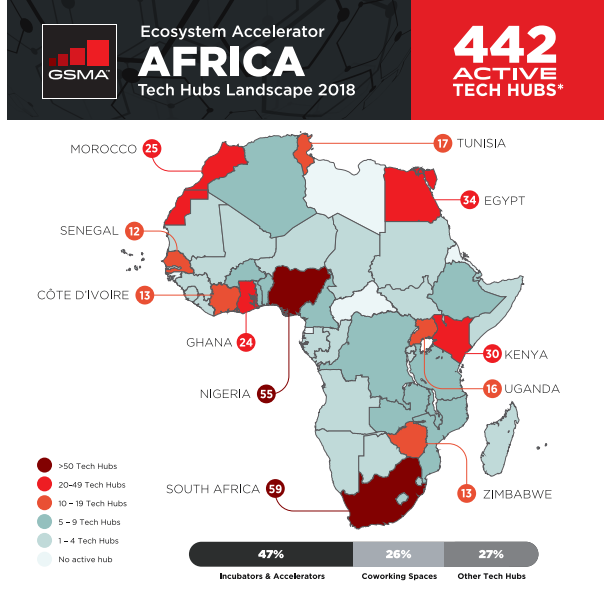
This is becoming a startup continent, with thousands of VC-backed ventures tackling every problem and opportunity. Prominent startup categories include fintech, e-commerce, logistics, and agritech. Venture companies that utilize blockchain are also emerging, such as Hello Tractor and SureRemit.
Nigeria, Kenya, South Africa and Ghana are emerging as hubs of VC, startup and incubator activity. While the value of capital flowing into tech companies each year is still a subject of statistical debate, the continent surpassed the VC mark of $1 billion in 2018, according to Partec data.

$1 billion may barely register in a market like Silicon Valley; At least in comparison, that’s more than a 100 percent increase in VC to Africa in four years..
The value proposition for African startups is shaped primarily around demographic trends such as a young population and urbanization, as well as growth, reform and modernization in the continent’s core economies.
Although Africa (mainly sub-Saharan Africa) remains at the bottom of most global rankings for smartphone penetration (33%) and internet penetration (35%), both continents continue to record the world’s fastest growth. Collectively, African countries, businesses and 1.2 billion people are rapidly digitizing.
In the startup scene, Africa currently underperforms in terms of big money events. There have been only a few notable exits, one unicorn and one large IPO (the same company, Jumia).
However, this is still a young technology market. Most of Africa’s VC growth, startup formation and digital infrastructure improvements have occurred in the past five to 10 years.
IPO outlook
Returning to the IPO outlook for African startups, there are several companies that could join Jumia in listing on major global exchanges.
Plans for pan-African fintech company Interswitch to dual-list on the Lagos and London Stock Exchanges have been postponed since 2016.
Interswitch doesn’t release financial statistics, but the company could potentially generate $100 million in annual revenue given its growing payments and digital financial infrastructure across Africa.
I mention this benchmark because its $100 million revenue point serves as an unofficial IPO benchmark for startups and investors. Jumia achieved that last year (albeit with heavy losses).
Despite all the breakthroughs taking place in Africa’s economic and technology sectors, startups operating in Africa will find it difficult to reach those revenue levels. The overall operating environment remains fairly costly and demanding.
No doubt, more IPOs are on the way. In addition to Interswitch, other African startups whose fundamentals could meet investors’ expectations include Nigerian payments firm Paga, e-commerce venture Mall for Africa, and fintech ventures Cellulant (Kenya) and Jumo (South Africa).
Having said that, when it comes to payout events for founders and investors in Africa, I like to focus on acquisitions. More specifically, the acquisition of ventures that extend digital models across Africa’s informal economy space.
Startups and Africa’s informal economy
A large amount of commercial activity takes place off-grid in Africa, including taxation, data capture, and registration operations.
The continent’s informal sector is estimated to account for up to 50 percent of Africa’s economic activity and employ more than 60 percent of the workforce. GDP revisions in several African countries have revealed that billions of dollars have been lost in commercial transactions due to outdated statistical methods. A drive or walk through Africa’s major cities, filled with markets and street vendors, reveals that business is happening everywhere, not necessarily tied to formal services or recorded in government statistics.
The needs and demands of consumers and small businesses operating in Africa’s informal sector are also not reflected in many of the continent’s existing businesses.
Startups are shaping APIs, products, and business models to scale and create revenue streams and services in Africa’s informal economy space. Key areas in this sector include agricultural technology, digital advertising, logistics, e-commerce, and mobile customer acquisition apps.
Fintech businesses that tap into Africa’s large unbanked and unbanked consumers and small and medium-sized businesses have the greatest potential. According to recent WeeTracker, Briter Bridges and Partec research, this sector currently receives the most VC investment.
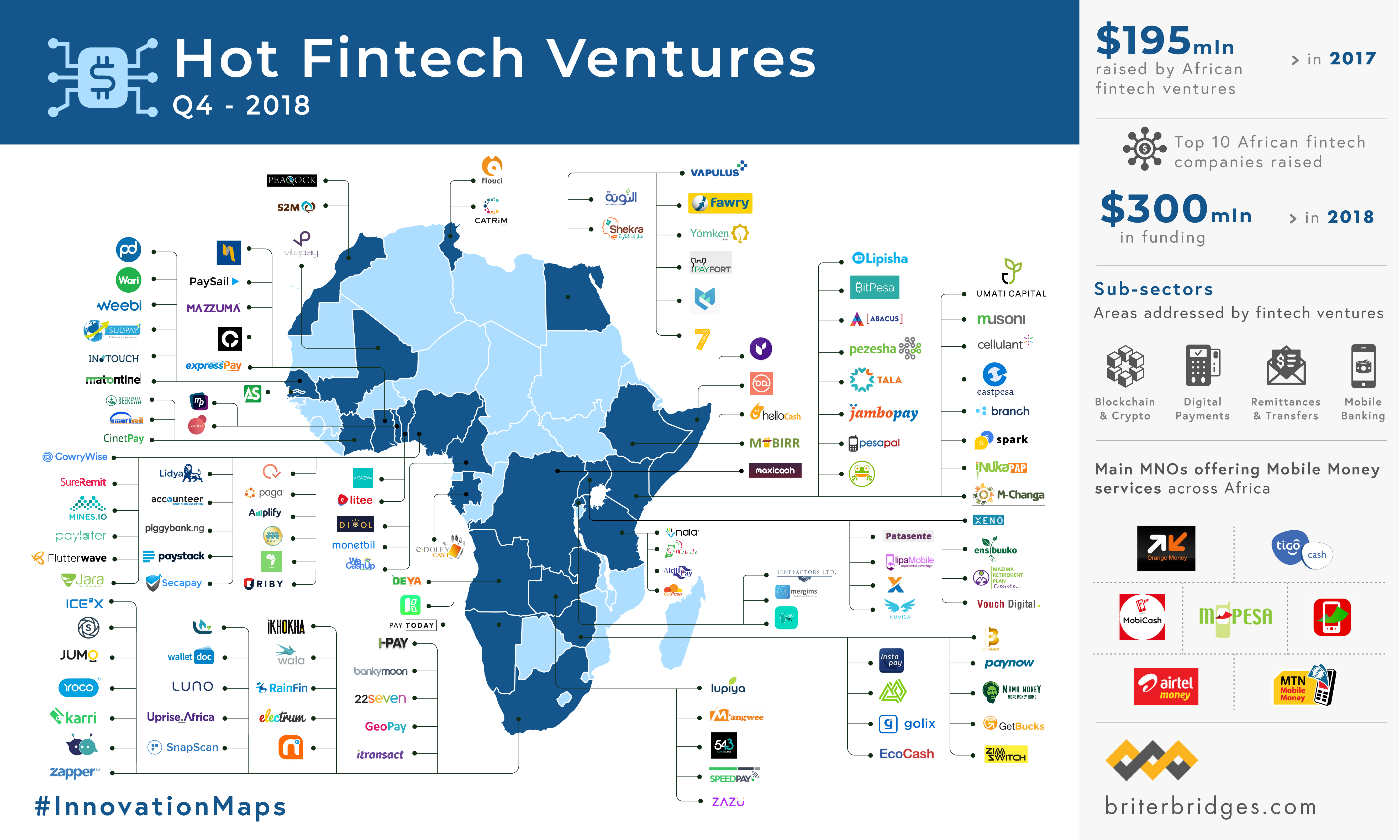
Some startups, such as Mines.io and M-Survey, are already selling their services to large African banks and telecom companies. And some of these large banks and telecommunications companies have established venture departments to invest in startups.
You can probably see the equation coming together here. African startups, particularly in the fintech sector, are finding ways to combine venture capital with digital and mobile to meet customer needs and generate revenue streams in Africa’s informal economy. They tap into consumer and small business demands that larger companies typically couldn’t reach.
It’s a pretty good bet that these established African companies, especially the banks and telecoms companies, will start acquiring some of these startups, creating an exit and a round of the continent’s nascent tech billionaires. And these events are likely to happen faster and in greater volume than Africa’s big tech IPOs on major exchanges (we’ll talk about the prospects for local listings in a future Extra Crunch article).
So look out for African startups scaling their solutions in the continent’s informal economy. The CEOs of those companies may be the next to join the club of globally successful founders.
