


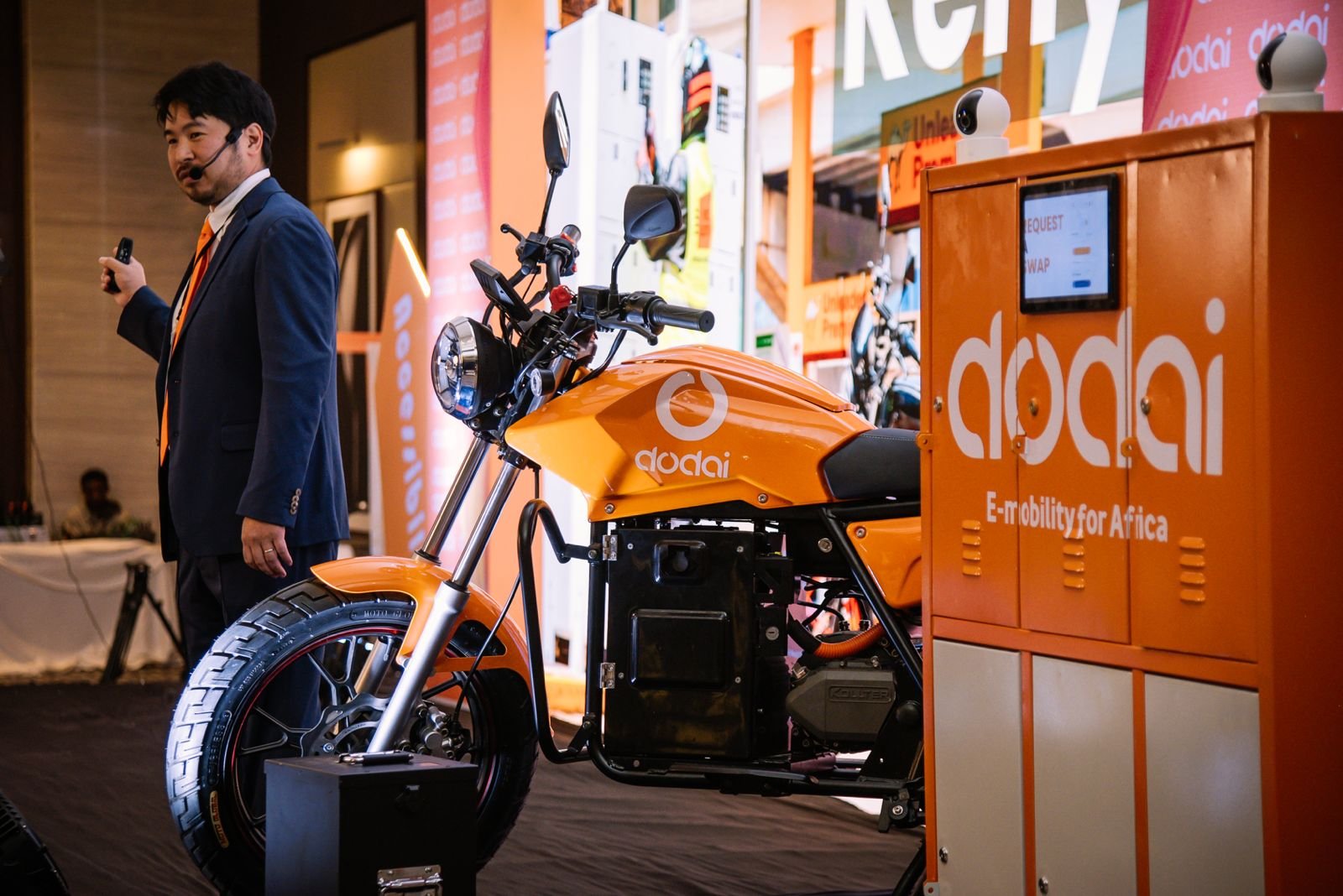
E-mobility startup Dodai is building and operating the infrastructure needed to make electric vehicles (EVs) practical, affordable, and scalable in Ethiopia.
Founded in 2023, Dodai is primarily focused on electric two-wheelers and three-wheelers and supports their use through a battery exchange network that allows drivers to replace exhausted batteries in minutes without waiting for long charging times.
By delivering the vehicle, battery, and energy infrastructure as part of an integrated system, Dodai removes many of the cost, reliability, and accessibility barriers that have historically limited EV adoption in emerging markets.
“Dodai has identified a significant gap between strong policy ambitions for electric mobility and the practical realities faced by everyday users. Ethiopia has an abundance of renewable electricity and supporting regulations, but charging infrastructure remains limited, access to electricity is uneven, and consumers are under significant economic pressure,” Yuma Sasaki, founder and CEO of Dodai, told Disrupt Africa.
“Many e-mobility solutions imported from developed markets are poorly suited for these situations and remain unaffordable or impractical for most users.”
Dodai’s battery replacement model directly addresses these challenges by prioritizing affordability, speed, and reliability. Sasaki said the company primarily competes with gasoline-powered motorcycles because no other company has built an integrated swapping network at scale.
“Indeed, one of the reasons we were committed to starting with Ethiopia is that while the country has strong fundamentals – Africa’s second largest population, strong growth prospects and liberalized economic policies – it remains a ‘blue ocean’ with limited competition,” he said.
Sasaki says this uptake has been largely driven by economic necessity.
“In Ethiopia, as in many parts of Africa, transportation is not a lifestyle choice but a means of making a living, and users adopt electric mobility when it is clearly cheaper and more reliable than alternatives. For passengers, delivery drivers and small business owners, the deciding factor is whether the vehicle can reduce daily operating costs and allow work to continue without interruption,” he said.
“The strongest adoption of Dodai is therefore from commercial users operating in Addis Ababa, who assemble their electric bikes in Addis Ababa and support them with a growing battery exchange network. Motorists who switch from fuel-powered bikes to Dodai electric bikes report dramatic savings, in some cases reducing fuel and maintenance costs by 80-90%. These savings translate directly into increased take-home pay, reduced financial stress, and improved income stability.The reliability of electric bikes, which require less maintenance and experience, means fewer breakdowns and allows drivers to work longer, more predictable hours, and for most users, affordability, reliability, and a more stable lifestyle are the motivations for adoption.
For now, the startup is building a battery swapping network in Addis Ababa, but plans to soon move to other major urban hubs in Ethiopia and expand to neighboring African countries that share similar market dynamics. We secured a USD 7 million funding round in 2024, allowing us to accelerate our infrastructure deployment and expand our team.
“A major milestone is underway in the market, where imports of internal combustion engine vehicles were banned for the first time in the world in January 2023, which has significantly accelerated interest in alternative electric vehicles such as those offered by Dodai,” Sasaki said.
Dodai makes money from electric bike sales and battery replacement fees.
“As an infrastructure-driven company, Dodai is currently prioritizing network expansion and utilization over short-term profitability. Revenues have steadily increased as we have deployed, and unit economics at the battery and fleet level have also improved as we scale,” Sasaki said.
Dodai has faced challenges unique to launching an infrastructure-focused business in emerging markets, including uneven power access and upfront capital requirements.
“There are also supply chain constraints for batteries and parts, so careful planning is required,” Sasaki said. “However, Ethiopia’s growing renewable energy capacity and strong policy support have improved the long-term outlook.”
