


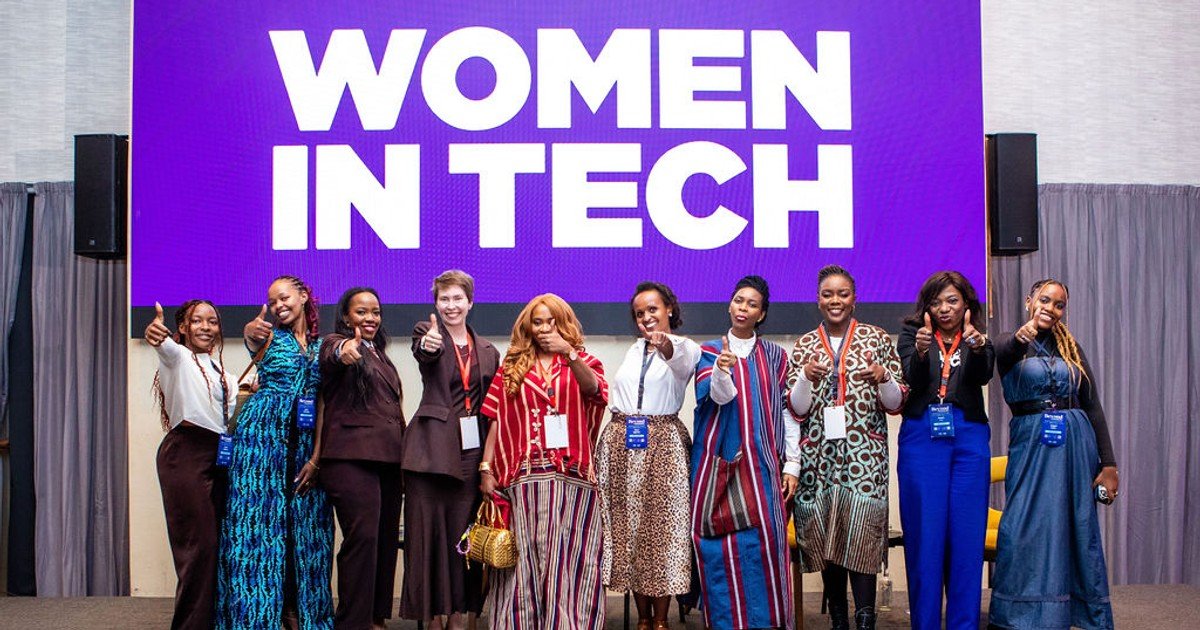
But as Africa accelerates the adoption of AI across sectors, critical questions are emerging: Will women help shape Africa’s digital future, or will the industry repeat the gender gap that has long defined the global tech ecosystem?
Globally, women make up just 35% of STEM graduates and about 26% of the data and artificial intelligence workforce. But industry leaders say the rapid evolution of AI tools could shift that balance by making innovation more accessible.
These questions were at the heart of the discussion at Beyond Boundaries: Women in Technology Global Exchange, hosted in Nairobi by Kenyan Women in Technology in partnership with Uzbekistan Women in Technology.
The gathering brought together founders, cybersecurity experts, fintech leaders, and policymakers to explore how women can play a greater role in Africa’s expanding digital economy.
For Kenyan tech founder Tony Ndungu, the AI boom marks a turning point.
“Previously it was only for people who code or work in the technology field, but now it’s for everyone,” Ndungu said. “The question is, why aren’t you involved?”
He said advances in AI tools and computing power are opening up opportunities across industries such as healthcare, agriculture, insurance and education.
“You don’t have to go far to see medical issues, education issues, agricultural issues,” he says. “That means you don’t have to go far to find opportunities.”
But while technology may be lowering barriers to entry, structural challenges remain.
Lucy Mbusia, Kenya’s county director for women in technology, says more women are actively seeking opportunities in the field. Over the past two years, she has seen an increase in women enrolling in training programs, joining professional communities, and building new digital skills.
“Women are taking steps to improve their skills, participate in programs, and become part of the community to advance in the technology ecosystem,” Mbusia says.
She also noted that there is a growing presence of female leaders within banks, telecoms and technology companies, many of which now have internal mentoring and networking initiatives for female employees.
Still, progress is not equal.
“I think the one thing that has stubbornly remained the same is paying women in tech the same wages as men in the same roles,” Mbusia said. “The disparity there is still really big.”
Visibility is also a challenge.
Jason Masai, head of digital product development at M-PESA Africa, says women are already a key part of the technology ecosystem, both as customers and professionals. However, their contributions are not always widely recognized.
“There are a lot of women on this continent doing great work in technology, but to some extent people don’t know about them,” Masai says.
He believes that assertiveness plays an important role in ensuring that work and accomplishments are recognized.
“The reality is, your job never speaks for you,” he said. “You have to stand up, advocate for yourself, and showcase your worth and skills.”
Another area of opportunity is cybersecurity, where the global demand for skilled professionals continues to grow.
Cybersecurity strategist and AfricanHackon founder Bright Gameli said the rise of AI has made digital security even more important. He noted that the field has multiple entry points, from technical roles to governance and policy.
“There are many ways to get into cybersecurity,” Gameli said.
At the same time, artificial intelligence is changing the way online spaces are managed.
Evelyn Kasina, CEO of Eveminet, a safety partner for platforms like Meta, Google, and TikTok, says AI-powered tools are increasingly being used to detect and remove harmful online content.
But she believes that same technology also gives women an unprecedented opportunity to shape the public conversation.
“There are no gatekeepers anymore,” Kasina said. “As long as you’re behind the screen and you have something to say, you should say it as confidently and as loudly as possible.”
As Africa’s digital economy expands, so too does interest in gender inclusion. Artificial intelligence is already reshaping industries from finance to agriculture to logistics.
For many participants in Nairobi, the conclusion was clear. Access to technology alone will not determine who will shape Africa’s technological future.
Our current focus is on expanding our visibility and influence across the industry.
