



With the Africa Cup of Nations being held in Moroccan cities from December 21 to January 18, the continent’s biggest football tournament is attracting attention not just for the matches, but also for what it reveals about Africa’s evolving approach to sustainability, infrastructure and long-term public value.
With packed stadiums and millions of spectators from across the continent and abroad, AFCON is as much a sporting spectacle as it is a real-time test of how Africa will manage large-scale events under increasing climate, financial and social pressures.
For the host nation, tournaments of this magnitude are no longer judged solely on organization and atmosphere. They are increasingly valued by what they leave behind. Governments across Africa are facing increased public scrutiny of how major infrastructure investments are financed, built and maintained. This scrutiny is heightened by fiscal constraints and increased efforts to tackle climate change, forcing policymakers to justify not just the costs of mega-events, but also their long-term contributions to economic resilience and social inclusion.
Also read: CHAN 2024: How African football is driving sustainable infrastructure in East Africa
According to the Organization for Economic Co-operation and Development, Africa’s sovereign debt will reach around 67% of GDP in 2024, with several countries rated at high risk of falling into a debt crisis. These fiscal realities have changed the way we look at large-scale public works projects. Stadiums, transport corridors and urban improvements associated with AFCON are no longer viewed as one-time event costs, but as assets expected to generate value long after the final whistle.
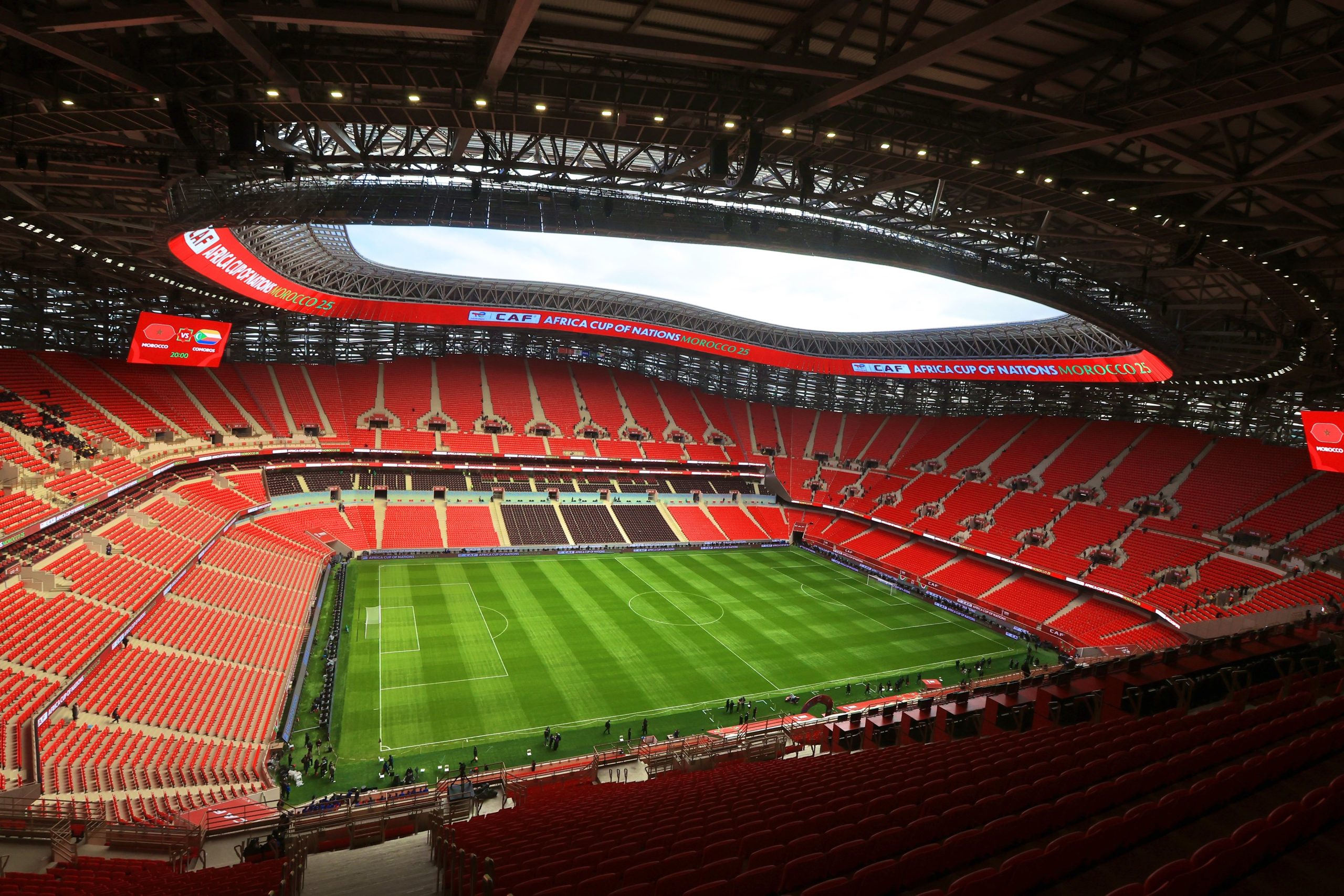
Morocco’s hosting of AFCON reflects this change. Preparations for the tournament have been deliberately aligned with broader national development priorities, including transport, energy and urban planning, among others. Stadium renovations in cities such as Rabat and Casablanca were designed for year-round use, while rail and airport upgrades were planned as improvements for visiting fans as well as residents and businesses.
This approach signals a shift from event-driven construction to city-driven infrastructure planning, where sustainability is measured by longevity rather than spectacle.

Earlier this year, Kenya hosted the African Nations Championship. The tournament was centered around domestic leagues and provided a small but useful sustainability model. The Africa Sustainability Matters report found that while stadium renovations in Nairobi and other host cities are being planned around continued public use, operational reforms are focused on efficiency and cost control.
Although CHAN did not garner as much global attention as AFCON, it reinforced a lesson across the continent that football infrastructure becomes a burden to its citizens if it is not readily repurposed.
Taken together, these experiences point to a broader shift in how African governments and development actors approach mega-sporting events. Energy demands, transportation emissions, waste management, and post-event utilization are woven into every nook and cranny of planning. These are no longer abstract sustainability ideals, but practical considerations that shape procurement, financing, and operations.
How fans travel to matches, how waste within stadiums is disposed of and how facilities are managed after the tournament now forms part of the public liability equation.

Also read: Morocco champions Africa-centric ESG standards to enable sustainable mining investments
AFCON also resumed discussions on sponsorship and funding. While corporate partners remain essential to funding tournaments, their role is increasingly being questioned by civil society and policy observers. High-profile sponsorships are now judged not only on brand awareness but also on their environmental credentials.
Critics argue that sustainability claims risk becoming superficial if they are not tied to measurable outcomes. Supporters counter that well-constructed partnerships can accelerate investment in clean energy, efficient logistics and community programs. What has changed is that transparency and reporting have become as important as marketing.
Beyond infrastructure and finance, sustainability is also shaped at the community level. Across the host city, local organizations, volunteers and youth groups have used match day to promote environmental awareness, from waste reduction campaigns to neighborhood clean-ups. These initiatives may seem modest, but they highlight football’s unique ability to influence behavior at scale, especially among young people, when sustainability is tangible and practical rather than abstract.
Fan behavior itself is part of the sustainability equation. According to research cited by the United Nations Environment Program and UNFCCC’s Sport for Climate Action Initiative, when venues actively promote green practices, spectators are more likely to adopt them as well.

Clear recycling systems, accessible public transportation, and consistent messaging can form habits that last beyond the event. In this sense, AFCON does not just reflect sustainability trends; It helps normalize them.
Economically, the African Cup of Nations remains a powerful driver. It attracts the largest television audience on the continent and generates significant commercial activity for the host city. The challenge is to ensure that this momentum supports inclusive growth rather than increasing environmental and social costs.
When sustainability principles are built into planning and operations, sporting events can help fund resilient infrastructure and support local businesses, rather than burdening public budgets. Football infrastructure, once treated separately from development policy, is now drawn into debates shaped by the African Union’s Agenda 2063 and national climate strategies.
Connect with us on LinkedIn: Sustainability in Africa matters
