Close Menu
Xsum NewsXsum News

    Stay Updated.

    Get the latest Africa-focused business & infrastructure news and more directly to your inbox.

    What's Hot

    Mining Review Africa launches French and Portuguese versions to bridge regional digital divide

    Building South Africa’s next chapter through sustainable infrastructure

    Southern Africa Eco-Infrastructure Summit 2026 accelerates sustainable infrastructure and green real estate investment across the southern region

    Facebook X (Twitter) Instagram
    Trending
    • Mining Review Africa launches French and Portuguese versions to bridge regional digital divide
    • Building South Africa’s next chapter through sustainable infrastructure
    • Southern Africa Eco-Infrastructure Summit 2026 accelerates sustainable infrastructure and green real estate investment across the southern region
    • Sustainable infrastructure strengthens South Africa’s future
    • Initial 11 rail operators selected for 41 routes as South Africa takes major step in opening up freight rail to private sector
    • Risk mitigation focused as SA opens rail and port networks to private participants
    • AIHS partners with Federal Department of Housing and Urban Development at 18th Housing Show
    • AIHS mourns Raila Odinga and celebrates his work in affordable housing and urban development
    X (Twitter) Instagram YouTube LinkedIn TikTok
    Xsum NewsXsum News
    • African Development Bank
    • Africa Finance Corporation
    • All Africa – Construction & Infrastructure
    • Africa Intelligence
    • Construct Africa
    • More
      • Mining Review Africa
      • Energy Capital Power
      • Sustainability & Climate-Resilient Infrastructure
      • Private-Sector Infrastructure Players
      • Urban Development & Housing
    Xsum NewsXsum News
    You are at:Home»More»Energy Capital Power»South Africa bets on local hydrocarbons to cut $19.6 billion dependence on fuel imports
    Energy Capital Power

    South Africa bets on local hydrocarbons to cut $19.6 billion dependence on fuel imports

    Xsum NewsBy Xsum NewsMarch 21, 2026No Comments4 Mins Read6 Views
    Facebook Twitter Pinterest Telegram LinkedIn Tumblr Email Reddit
    Share
    Facebook Twitter LinkedIn Pinterest WhatsApp Email

    South Africa’s Minerals and Petroleum Resources Minister Gwede Mantashe has called for accelerating the development of the country’s oil and gas resources to address the country’s $19.6 billion dependence on imported oil. Speaking in Cape Town this week, Minister Mantashe said the ongoing Gulf War has exposed the country’s vulnerabilities and stressed that local exploration and production could reduce exposure to global market shocks.

    “The sustainable long-term solution to our challenges lies in domestic production. This can only be achieved through rigorous exploration and responsible development of our own oil resources,” he said.

    Imported fuel reveals South Africa’s energy exposure

    South Africa faces the risk of fuel rationing as the conflict between the US and Iran exacerbates global supply chain disruptions, with petrol stations across the country already experiencing diesel shortages in several provinces. Pressure is mounting on fuel prices, with global oil prices soaring above $100 per barrel since the outbreak of the Gulf War, potentially triggering an increase of R2 to R4 per liter in April 2026. This situation highlights the urgent need to address structural weaknesses in South Africa’s energy system, particularly its dependence on imported fuels.

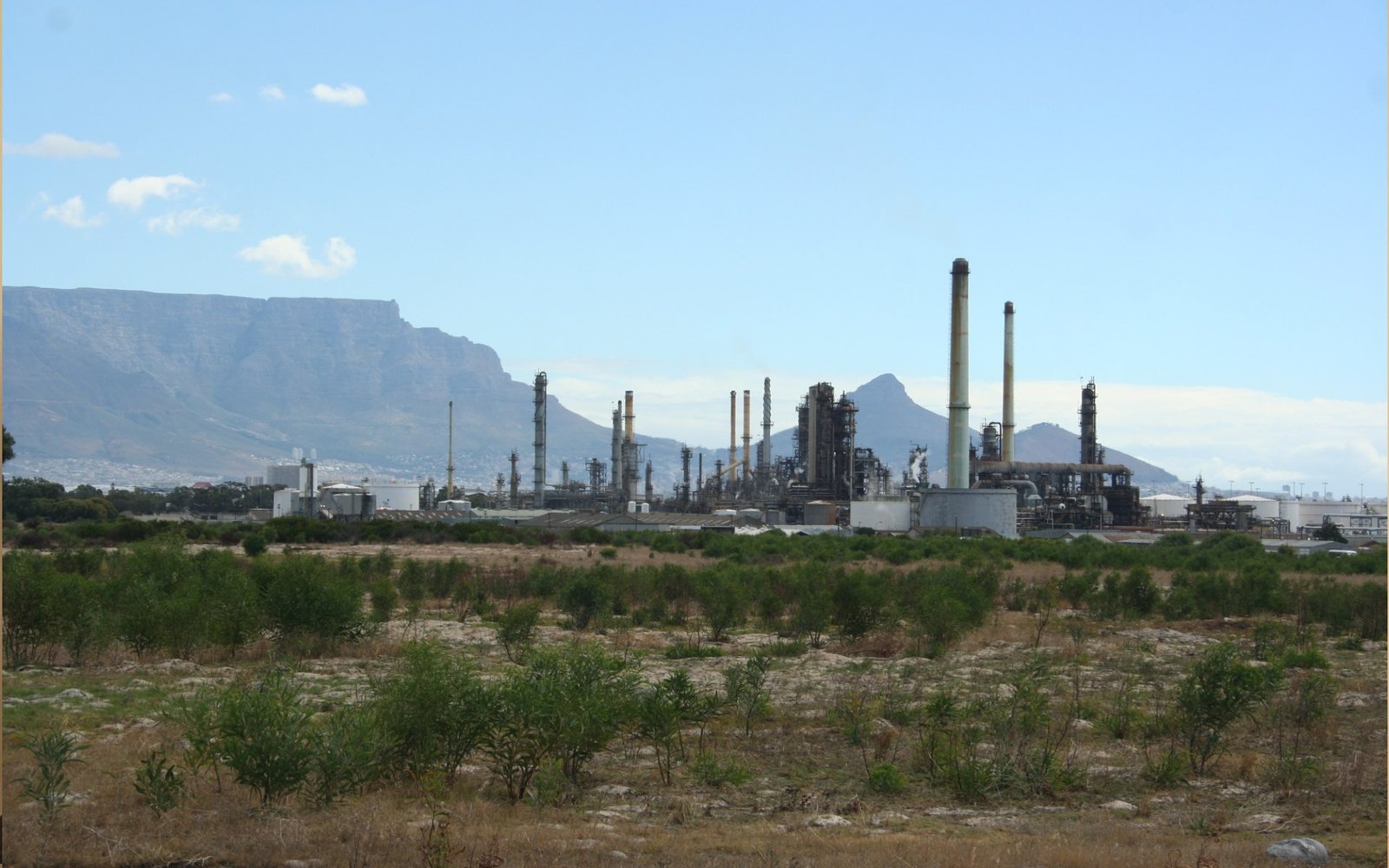
    In 2025, South Africa’s imports of mineral fuels, petroleum and distillate products were approximately $19.63 billion, up from $9.7 billion in 2020. This increase reflects increased economic activity and continued dependence on foreign resources to meet domestic demand. This coincides with a reduction in domestic refining capacity. Several facilities, including the state-owned PetroSA refinery and Durban’s Engen refinery, have ceased operations or been converted into import terminals, leaving only NATREF and Astron Energy facilities operational. This exposes the country to the knock-on effects of global price fluctuations, logistics risks and fluctuations in fuel costs on transport, manufacturing and the broader cost of living.

    “The truth is that rising oil and gas prices have a direct knock-on effect on the cost of living. Lack of access to these resources has an even greater impact as it can lead to energy poverty, increased unemployment and further entrenchment of poverty and inequality,” Minister Mantashe said.

    Regulatory reforms aimed at addressing this issue

    To address this vulnerability, governments are focusing on unlocking local hydrocarbons as part of a long-term energy security strategy. Gas and condensate discoveries in the South Outeniqua Basin confirm the existence of a working oil system, and the basin’s undeveloped deep water is believed to have a meaningful future. The country’s Orange Basin, which it shares with Namibia, has similar potential, where up to 11 billion barrels of oil and 2.2 trillion cubic feet of gas have already been identified. Geological continuity with nearby discovery sites has raised hopes that a similar migration type may also exist off the coast of South Africa.

    Removing regulatory barriers, as the Ministry of Minerals and Petroleum Resources has promised, could free up local production capacity and create a path to self-sufficiency. Legislative reforms are already underway. The Upstream Petroleum Resources Development Act (currently being finalized and expected to be promulgated by the end of March 2026) provides a clearer and more modern legal framework for exploration and production, while the Petroleum Products Bill is being modernized to improve access to domestic resources and reduce import dependence. Additionally, the newly established South African National Oil Company is designed to centralize the country’s participation in the sector and coordinate exploration, licensing and production plans.

    “These reforms aim to ensure fair access to the country’s oil resources and their sustainable development, and reduce the country’s dependence on imports of finished products to meet domestic demand in the long term,” Minister Mantashe said.

    With the foundations in place, the real question is how quickly South Africa can leverage policies to attract investment and develop the exploration, production and infrastructure base needed to transform from an import-heavy market to a self-sustaining hydrocarbon economy.

    Africa bets billion cut dependence fuel Hydrocarbons imports local South
    Share. Facebook Twitter Pinterest LinkedIn Reddit WhatsApp Telegram Email
    Previous ArticleTanzania supports equity investment in African Finance Corporation after rating upgrade
    Next Article Construction of Africa’s first ‘Miracle Road’ begins in South Africa
    Xsum News
    • Website

    Related Posts

    Mining Review Africa launches French and Portuguese versions to bridge regional digital divide

    April 17, 2026

    Building South Africa’s next chapter through sustainable infrastructure

    April 14, 2026

    Southern Africa Eco-Infrastructure Summit 2026 accelerates sustainable infrastructure and green real estate investment across the southern region

    April 14, 2026
    Leave A Reply Cancel Reply

    Top Posts

    African Development Bank Group and Nedbank Group sign multi-billion rand funding partnership to transform housing access and boost African trade

    December 19, 202529 Views

    A United Continent on the Move: Ambassador Kouyateh’s Call for an African Logistics Renaissance

    November 20, 202529 Views

    Eni secures multi-million dollar loan for African FLNG project

    January 26, 202622 Views

    African Development Fund and WHO collaborate to save Sudan’s health system

    November 17, 202522 Views
    Don't Miss
    Mining Review Africa April 17, 2026

    Mining Review Africa launches French and Portuguese versions to bridge regional digital divide

    670 VUKA Group’s flagship publication, Mining Review Africa, this week launched a French and Portuguese…

    Building South Africa’s next chapter through sustainable infrastructure

    Southern Africa Eco-Infrastructure Summit 2026 accelerates sustainable infrastructure and green real estate investment across the southern region

    Sustainable infrastructure strengthens South Africa’s future

    Stay In Touch
    • Twitter
    • Instagram
    • YouTube
    • LinkedIn
    • TikTok

    Stay Updated.

    Get the latest Africa-focused business & infrastructure news and more directly to your inbox.

    About Us
    About Us

    Xsum News is Africa’s digital window into the future of business. We tell stories of innovation, enterprise, and investment that are shaping the continent’s economic rise. African Business, Added Up.

    X (Twitter) Instagram YouTube LinkedIn TikTok
    Our Picks

    Mining Review Africa launches French and Portuguese versions to bridge regional digital divide

    Building South Africa’s next chapter through sustainable infrastructure

    Southern Africa Eco-Infrastructure Summit 2026 accelerates sustainable infrastructure and green real estate investment across the southern region

    Most Popular

    African Development Bank praises Algeria’s development model, aims to replicate its success across the continent

    Considering the redefinition of African capital by UBA and Arauba

    G20 Energy Investment Forum brings together Africa’s top finance, insurance and technology leaders

    © 2026 Xsum News. All Rights Reserved.
    • 🌍 About Xsum News
    • 📬 Contact us
    • Privacy Policy
    • Terms & Conditions
    • Disclaimer

    Type above and press Enter to search. Press Esc to cancel.