


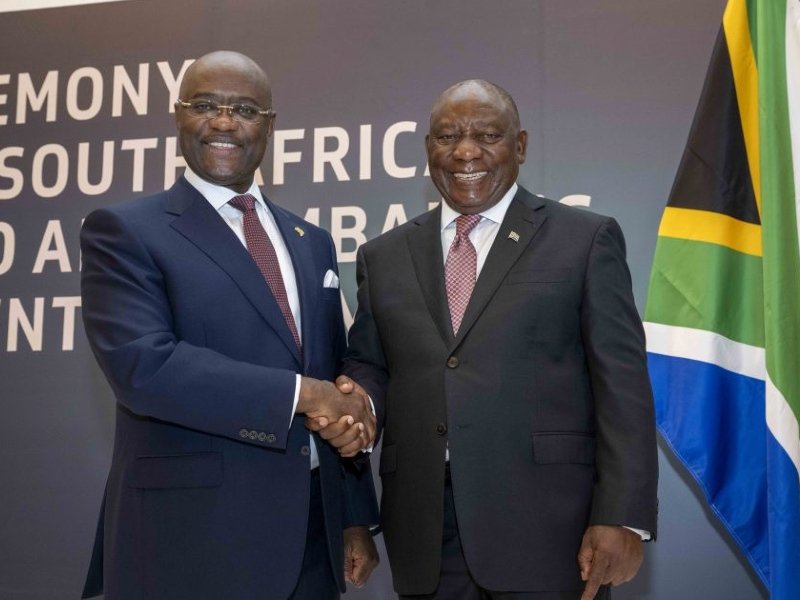
South Africa’s membership in Afreximbank will unlock a new layer of long-term finance for energy, infrastructure and industry, supporting an $8 billion dedicated country program.
For Afreximbank, being based in Africa’s largest trading economy strengthens its ability to expand intra-African trade and deploy more than $40 billion in assets across strategic markets.
South Africa has officially joined the multilateral financial institution African Export-Import Bank (Afreximbank) as its 54th member, marking a significant increase in the country’s access to long-term development and trade finance. The move is aimed at deepening South Africa’s production base, expanding infrastructure development and advancing regional trade integration, while anchoring Afreximbank’s presence in Africa’s largest economy through the launch of an $8 billion dedicated country program. As the partnership moves from membership to implementation, what does this expanded financing footprint mean for South Africa’s growth trajectory, industrial competitiveness and role in intra-African trade?
strategic economic drivers
Joining Afreximbank represents a potential economic turning point for South Africa. The country aims to reduce unemployment by 32% by 2026, and aims to boost per capita GDP growth by 33% by 2043, with investment in mining, energy and manufacturing as pillars. The country needs more than R1.5 to realize its energy security and environmental sustainability strategy, the Just Energy Transition Investment Plan, and Afreximbank’s financing instruments and country programs could play a catalytic role in advancing these goals.
Targeted programs strengthen trade and industry capacity
South Africa and Afreximbank have committed to promoting joint trade and economic development programmes, including the South Africa-Africa Trade and Investment Promotion Programme, aimed at expanding trade and industrial development. Afreximbank guarantee program designed to reduce risk for lenders and investors. Financing industrial parks and special economic zones, mobilizing funds for public infrastructure, etc. According to Afreximbank’s President and Chairman of the Board, these programs, along with an $8 billion package of country programs, are in line with the country’s 2030 National Development Plan, which aims to eradicate poverty, reduce inequality and boost employment.
From membership to momentum: growing deal flow
South Africa’s accession to Afreximbank builds on the already strong funding relationship between both parties. The bank’s current project pipeline in South Africa exceeds $6 billion across healthcare, financial services, manufacturing, energy, industrial development and mining. In September 2025, Afreximbank and the South African Government signed a joint Project Preparation Facility Agreement to provide up-front funding to de-risk critical energy, transport, logistics and digital infrastructure projects led by South African government agencies. Earlier this year, Afreximbank was tasked with leading the financing of the $1.7 billion Suiso project, a coal-to-fertilizer development in South Africa’s Mpumalanga province. The project will construct a blue ammonia facility with a capacity of 2,200 tons per day. Collectively, these efforts represent a shift from interorganizational collaboration to viable deal flows.
Afreximbank’s expanding footprint in Africa
Afreximbank sees the addition of South Africa as strong evidence of its growing relevance across African markets. As the continent’s largest trading economy (accounting for 19.1% of total African trade in 2024), South Africa’s accession is expected to strengthen the bank’s ability to expand its contribution to the continent’s commerce and regional value chain development.
This milestone follows Afreximbank’s commitment of up to $10 billion to support intra-African trade through the effective implementation of the African Continental Free Trade Area (AfCFTA) and strengthens its mission to deepen cross-border trade and industrial integration among African Union member states.
The Bank has also played a key role in maintaining access to finance across the continent, particularly in capital-intensive sectors such as oil and gas, where international financing has tightened amid climate change and shifts in energy policy. As of December 2024, Afreximbank reported total assets and reserves of over $40.1 billion, supported by $7.2 billion in shareholder funds.
“For more than 30 years, Afreximbank has demonstrated its capacity, its resilience and its ability to innovate. But more than that, it has demonstrated its impact. This partnership will strengthen South Africa’s ability to support South African exporters, industrial projects and regional value chains in multiple ways, while fostering development on the continent,” said South African President Cyril Ramaphosa.
