


Stakeholders across West Africa are renewing their calls for urgent and coordinated intelligence-led action to combat human trafficking and transnational organized crime, warning that weak financial systems, gender inequality and porous borders continue to fuel the growing threat.
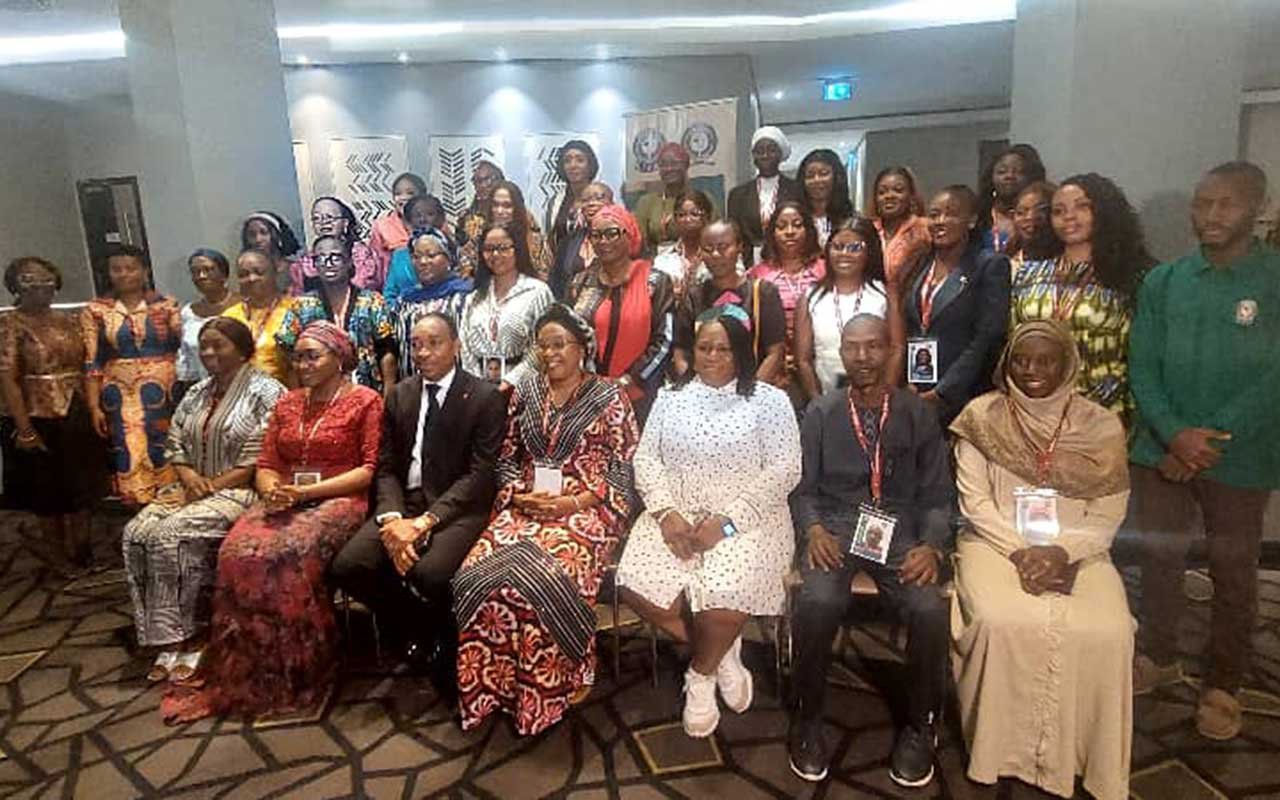
The call was made at the “Women and Transnational Organized Crime: GIABA-EGDC Joint Regional Forum on Human Trafficking Risks in West Africa” held in Ikeja Lagos from 17 to 19 December 2025. The forum brought together policy makers, financial intelligence practitioners, gender experts, law enforcement agencies, civil society organizations and development partners from across the ECOWAS region.
Edwin Harris, Jr., Executive Director of the Intergovernmental Action Group Against Money Laundering in West Africa (GIABA), speaking at the opening session, said human trafficking is a pervasive and evolving crime that undermines development, erodes human rights, fuels illicit economies, and threatens regional stability.
Citing data from the United Nations Office on Drugs and Crime (UNODC), Harris noted that in West Africa, more than 75 per cent of trafficking victims are children, while the region remains one of the world’s most affected by human trafficking, child labor and modern slavery. He also cited International Labor Organization assessments that show West Africa suffers from disproportionately high rates of forced labor, debt bondage, and related exploitation.
“These are more than just statistics. They represent thousands of lives, many of them children, who have been robbed of a future of dignity and opportunity,” Harris said.
She said human trafficking thrives in the region due to poverty and limited economic opportunities, deep gender inequality, conflict and displacement, porous borders, weak institutional capacity and the increasing involvement of organized crime networks. He stressed that human trafficking is a profit-driven crime supported by illicit financial flows, adding that traffickers exploit weak financial systems just as they exploit vulnerable populations.
Ms. Harris highlighted the importance of the partnership between GIABA and the ECOWAS Gender Development Center (EGDC), noting that while GIABA focuses on strengthening anti-money laundering and anti-terrorist financing efforts, EGDC addresses social and gender-based vulnerabilities exploited by traffickers. He said combining financial scrutiny with social protection and empowerment would be the most effective way to tackle both the supply of victims and the funding of traffickers.
In his welcome address, the Director and Chief Executive Officer of the Nigeria Financial Intelligence Unit (NFIU) and GIABA National Correspondent, Hafsat Abubakar Bakari, highlighted the economic dimension of human trafficking, saying it is one of the most lucrative forms of transnational organized crime around the world.
Citing estimates from the International Labor Organization and UNODC, Bakari said human trafficking and forced labor generate more than $150 billion annually, and women and girls account for more than 60 percent of identified victims worldwide. She noted that sexual exploitation and domestic labor remained particularly prevalent in West Africa.
“Behind every human trafficking victim is a financial trail,” Bakari said, explaining that proceeds from recruitment, transportation, fake documents and exploitation are often laundered through bank accounts, mobile money platforms, informal value transfer systems, shell companies and increasingly digital and crypto-enabled channels.
He highlighted West Africa’s intersecting vulnerabilities, including poverty, unemployment, displacement due to conflict and climate change, porous borders, and deep gender inequality, which criminal networks are exploiting to become more sophisticated. She said traffickers often recruit victims through trusted community networks and social media platforms, using false promises of education or employment.
Bakari referenced GIABA and Financial Action Task Force (FATF) typology reports showing that human trafficking networks in the region rely heavily on small-value, high-volume transactions and the use of third-party accounts.
There are many women and young people, and customer due diligence is weak in certain fields. These trends highlight the need for risk-based oversight and intelligence community-led interventions, she said.
He outlined NFIU’s role in analyzing financial data, disseminating actionable information, and supporting national and international cooperation. Bakari said that through the use of suspicious transaction reports and collaboration with agencies such as the National Agency for the Prohibition of Trafficking in Persons (NAPTIP), law enforcement agencies and prosecutors, financial intelligence is helping to identify human trafficking networks, trace their assets and interdict the proceeds of crime.
Also important is international cooperation, he added, noting that the exchange of information through platforms such as the Egmont Group has enabled cross-border tracing of trafficking-related funds and strengthened joint investigations.
Both speakers pointed out that human trafficking cannot be tackled in silos and emphasized the importance of multi-stakeholder cooperation. Civil society organizations are often the first to encounter victims and understand community-level dynamics, while financial intelligence units and law enforcement agencies expose the financial and operational structures behind crimes.
They noted that the Forum provides an important platform for integrating gender-sensitive analysis, risk-based anti-money laundering frameworks, and regional information sharing among ECOWAS Member States, in line with GIABA and FATF standards.
Calling for action beyond rhetoric, Ms Harris urged stakeholders to adopt holistic, collaborative and victim-centered strategies that prioritize prevention, community empowerment, education and livelihoods. Bakari echoed this call, stressing that disruption of all financial flows does not only mean weakening criminal networks, but also protecting human lives.
Participants are expected to use the three-day forum to strengthen trust, deepen cooperation, and develop actionable strategies to dismantle human trafficking networks and other forms of transnational organized crime across West Africa.
Both GIABA and NFIU reaffirmed their commitment to work closely with EGDC, ECOWAS Member States, civil society and international partners to ensure that human trafficking has “no refuge, no safe profit and no place” in the region.
