


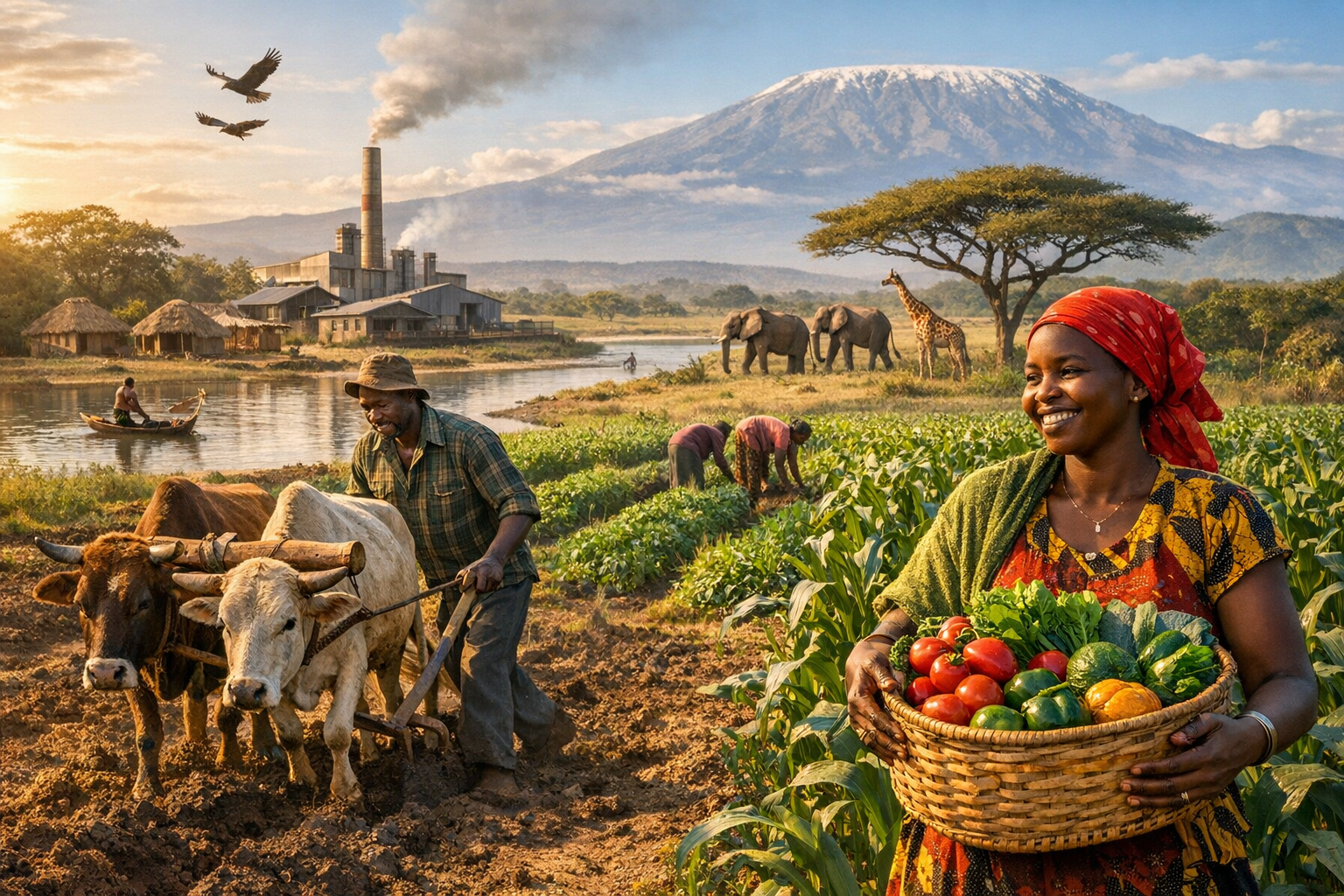
Africa is not poor. Poor governance.
It’s an uncomfortable truth, but it’s the only place we can start honest conversations about the continent’s future. The soil under our feet is fertile. The sun shines abundantly on our plains. Rivers flow through our land, forests breathe life into our air, and our people have the resilience and ingenuity that have survived generations of hardship.
Yet somehow, a continent so rich in life still struggles with hunger, unemployment and dependence.
The problem was never Africa’s potential. The question has always been how to manage that possibility.
Across the continent, we import food that we should be growing ourselves. Ships loaded with wheat, rice, powdered milk, cooking oil and processed foods arrive at the port, but vast tracts of arable land remain underutilized.
Farmers struggle without irrigation, modern tools, and reliable markets. Meanwhile, urban populations have become increasingly dependent on imported products that can easily be produced on African soil.
Food sovereignty must be the basis of Africa’s independence. A continent that cannot feed itself is always vulnerable. But Africa can feed itself. Our climate allows for a wide variety of crops. Our indigenous foods – sorghum, millet, cassava, yams and plantains – are not only highly nutritious, but also resilient to the climate stresses that increasingly threaten global agriculture.
Investing in agriculture should not be seen as an act of charity or subsistence. It should be seen as a strategy. When farmers prosper, the economy stabilizes. When communities produce their own food, nations regain control over their futures.
But eating is just the beginning.
Africa has long served as a supplier of raw materials to the world. We grow cotton, but we import clothing. We harvest cocoa, but we import chocolate. We export minerals, but we import electronics made from them. This pattern is no coincidence. It is the permanent architecture of a global system that always places Africa at the bottom of the value chain.
If Africa is to change its economic destiny, it must move beyond extraction. Manufacturing must become a central pillar of development. Our cotton needs to be spun into fiber in factories in Africa. Our agricultural products should be processed, packaged and sold as African brands. Our minerals should feed industries that produce technology, machinery and infrastructure within the continent.
Manufacturing is not just about making products. It creates an ecosystem. It builds supply chains, stimulates innovation, and creates jobs that move societies from survival to prosperity. Every factory established is more than just a building. It is a statement that Africa is shaping its own economic story.
At the same time, Africa needs to rediscover the value of its natural ecosystems. For decades, development often meant clearing forests, draining wetlands, and depleting soil. But the future may lie in the opposite: restoring landscapes, protecting biodiversity and restoring nature.
“Rewilding Africa” does not mean abandoning development. It’s about pursuing a smarter version of it. Rewilding degraded lands, restoring forests, and protecting wildlife corridors can coexist with thriving human communities. Healthy ecosystems support tourism, regulate climate, protect water sources, and sustain agriculture. A continent that respects its natural systems will strengthen its long-term prosperity.
But none of these visions – food independence, strengthening manufacturing, restoring ecosystems – is possible without a key element: governance.
Governance is the silent force behind every success and every failure. Where governance is strong, institutions work, investment flows, and people trust that their future is protected. When governance fails, corruption flourishes, infrastructure deteriorates, and opportunities disappear before they can take root.
All too often, across Africa, the continent’s wealth is dominated by a few political and economic elites, while the wider population remains excluded from opportunity. Money that would have been invested in irrigation systems disappears before it reaches farmers. Industrial policy exists only on paper. Environmental protection is ignored in favor of short-term profits. In such a situation, even the richest continent can feel poor.
Bad governance is more than just administrative failure. It is the root of many of Africa’s struggles.
But the story doesn’t have to end there. Across Africa, we are beginning to see signs of possibility. These include young entrepreneurs building technology companies, farmers adopting innovative methods, communities restoring degraded landscapes, and citizens demanding accountability from those in power. These are the seeds of a different Africa that grows its own food, manufactures its own goods, protects its ecosystems and governs itself with capacity and vision.
Africa doesn’t need to be something different. It simply has to become what it always had the potential to become.
