


“The scene became a crime scene.”
post reporter|Published 5 hours ago
Preliminary findings reveal that substandard materials and illegal construction practices led to the collapse of a four-storey building at the New Ahovilam Conservation Temple in Redcliffe last Friday.
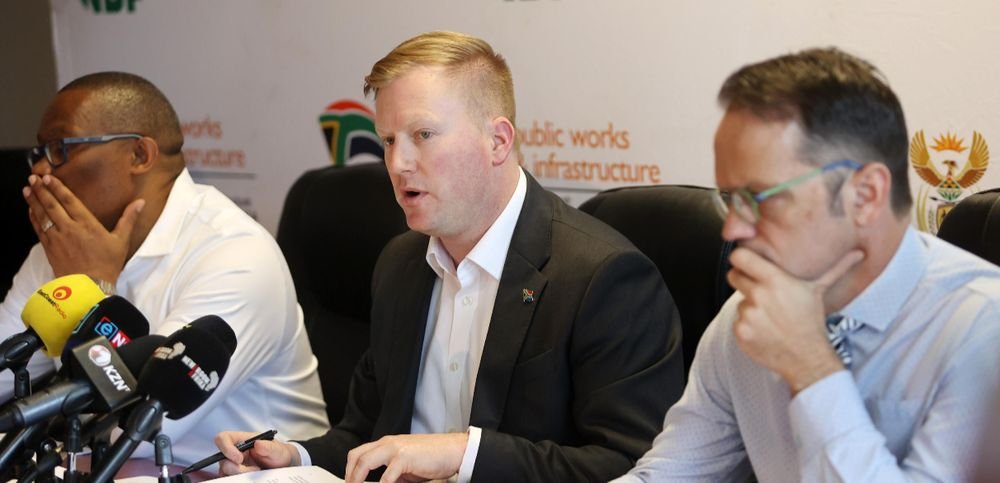
Minister for Public Works and Infrastructure Dean McPherson confirmed the site had been classified as a crime scene as authorities launched a comprehensive investigation into possible regulatory breaches and criminal negligence.
The incident claimed the lives of Food for Love Africa chef Vasudeva Dutta Das, 65, temple founder Vic Panday, 52, Kishore Haribjan, 63, a generous farmer who provided free vegetables to those in need, electrician Jayaseelan (Jace) Perumal, 58, and construction worker Adbul Prabhus.
Mr McPherson said at a press conference today (Wednesday) that preliminary findings revealed significant construction defects, regulatory violations and possible criminal charges.
Mr McPherson said the information was “preliminary in nature” and based on an initial expert assessment carried out by the Council for the Built Environment (CBE), which he was tasked with leading the investigation in conjunction with state and city authorities.
He said the structure involved was a multi-storey reinforced concrete building under construction, consisting of concrete columns, flat slabs and masonry walls.
He said the collapse occurred while concrete was being poured and that construction work was being carried out on the upper floors at the time of the accident, according to the report.
“Preliminary evidence, including available video footage, indicates a sudden structural failure, likely triggered by formwork or shutter failure during pumping of wet concrete,” he said.
Mr McPherson said it was also determined that substandard concrete material and substandard steel columns were used.
“It is therefore vital that we urgently track down suppliers and builders who used this material to prevent this from happening elsewhere,” he said. “We haven’t been able to locate it, but we’re working around the clock to track them down.”
He said the failures placed “significant and unusual dynamic loads” on the floors below, loads that the building was not structurally designed to withstand, resulting in a rapid and progressive collapse.
He said an initial visual assessment raised serious concerns about the quality of construction, including misaligned structural elements and potentially substandard materials.
“Rescue workers also reported that the concrete they encountered at the scene appeared to be brittle,” McPherson said, adding that further forensic testing was needed. “If you were there, you would have noticed that the concrete we saw was quite powdery.”
Of particular concern, he said, are preliminary indications that no approved building plans have been submitted, no building permits have been issued, and that the building may have been occupied prior to the issuance of the Occupation Certificate.
“All of these would constitute serious violations of national building regulations and standards,” Mr McPherson said.
He added that without these submissions, authorities would have been deprived of the opportunity to inspect, monitor and intervene during construction and “most likely could have halted construction.”
He confirmed that the scene has been officially classified as a crime scene and will be handed over to the Ministry of Employment and Labor once final work is completed to continue the statutory investigation with other authorities.
“These preliminary findings underscore the seriousness of this incident and the importance of a thorough and coordinated investigation to determine exactly what went wrong, who is responsible, and how similar tragedies can be prevented in the future,” McPherson said.
He said the exact failure mechanism would be determined through a detailed forensic investigation, but it was already clear that serious defects had occurred during construction.
Mr McPherson said he had taken steps to strengthen the criminal investigation given the clear signs of potential criminality.
“On Sunday afternoon, I formally wrote to the Acting Minister of Police, Minister Kacharia, requesting assistance in promoting interprovincial cooperation within the South African Police Service in relation to this investigation,” he said. “Specifically, we have requested that the SAPS investigation team in the Western Cape, which previously led the complex investigation into the George Building collapse, be made available to assist and collaborate with the KwaZulu-Natal SAPS team in charge of the Red Cliff incident, as appropriate. “The investigation is ongoing.”
He stressed that the intervention was not aimed at replacing local capacity.
“The purpose of this request is not to replace local investigative capacity, but to enhance it by drawing on experience gained from similar tragedies, and avoid the technical evidentiary and regulatory complexities that arise, particularly in the case of significant structural deficiencies,” Mr McPherson said.
He said the ministry is leading a technical investigation in collaboration with CBE and stands ready to assist law enforcement agencies.
“My department is leading the technical investigation into the collapse in collaboration with the Built Environment Council and stands ready to assist SAPS in any way necessary to ensure accountability, justice for affected families and the prevention of similar incidents in the future,” he said.
“When there is loss of life due to negligence or potential wrongdoing, there is no room for delay, division or uncertainty,” McPherson said. “Those responsible need to be identified and the law appropriately applied.”
Mr McPherson said the CBE had recommended three immediate preventive measures, which he fully supported. These include detecting illegal construction activities across municipalities, requiring ready-mix concrete contractors to notify building authorities of large-scale concrete deliveries, and launching community-based public awareness campaigns about the importance of building approvals and legal procedures.
He acknowledged that President Cyril Ramaphosa has been kept informed since the collapse.
He added that the President had received the preliminary investigation report and expressed full support for the measures taken to strengthen criminal investigations, technical oversight and coordination across government sectors.
While the preliminary report highlighted individual failings, Mr McPherson warned that the Redcliffe collapse, like the George Building incident, was indicative of systemic challenges in the regulation of South Africa’s built environment.
Responsibility for building management, workplace safety, professional regulation and enforcement is spread across multiple departments, and gaps in oversight can lead to repeat tragedies, he said.
“This is not an issue that can be addressed by any single sector or area alone. It is an issue that requires ministerial consideration based on the findings of this inquiry to determine whether stronger coordination mechanisms, clearer lines of responsibility or regulatory reform are needed,” he said.
Mr McPherson said technical, criminal and labor-related investigations were currently underway and would proceed without interference.
He said the ministry will continue to work closely with all relevant authorities to ensure that the criminal process is not compromised, and that once the investigation is complete, the results will be transparently communicated.
post
