


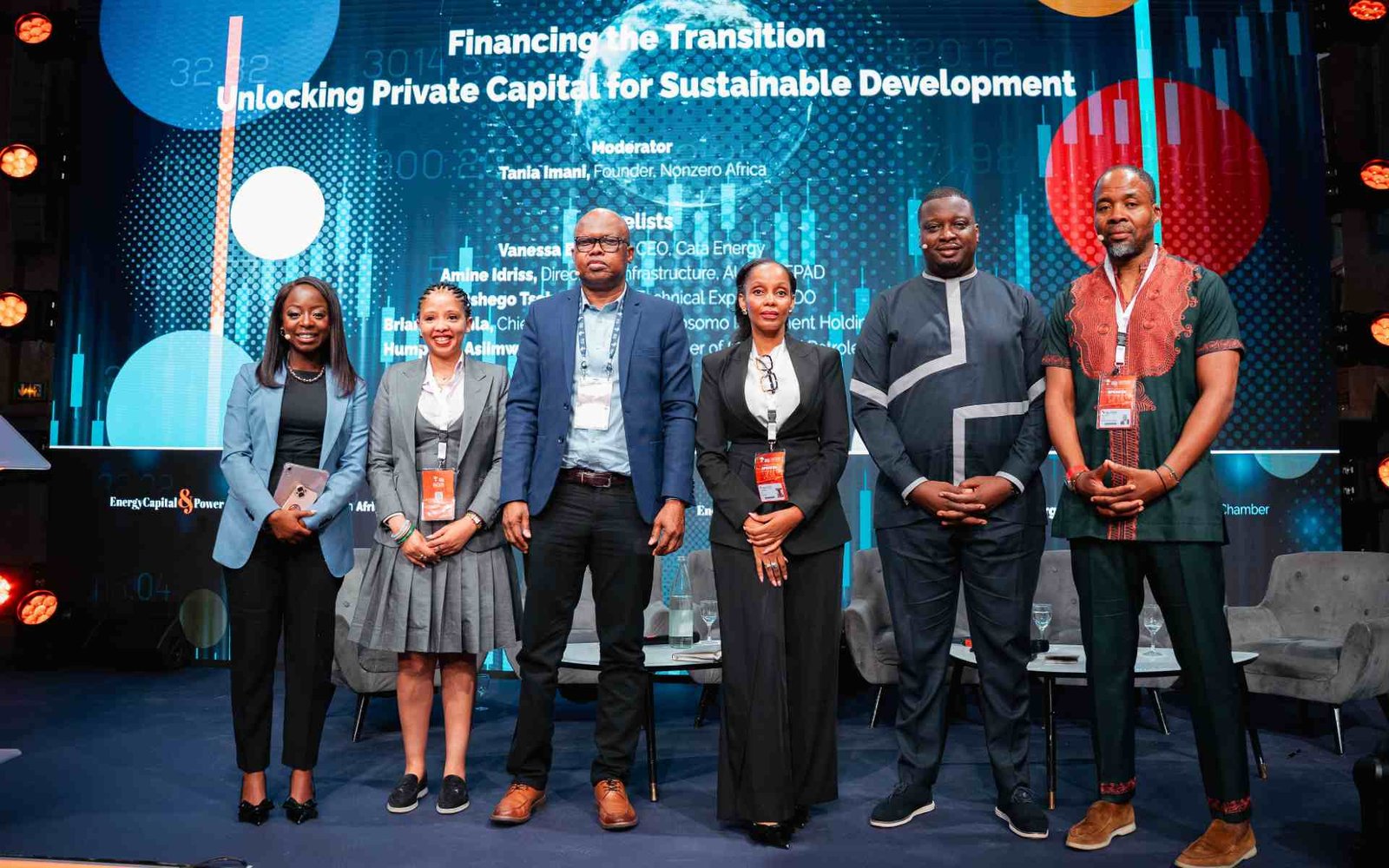
Africa’s energy demand is predicted to nearly double by 2040 due to rapid population growth and urbanization. To sustainably meet this surge, the continent needs to tap into its vast renewable energy potential, estimated at 10 terawatts (TW) of solar capacity alone, according to Vanessa Baldwin, CEO of Kata Energy, who spoke at Investment in Africa Energy (IAE) 2025.
These important issues were at the forefront of the “Financing the Transition: Unleashing Private Capital for Sustainable Development” panel. The session, moderated by Tania Imani, founder of NonZero Africa, convened industry leaders to discuss strategies for mobilizing private investment in Africa’s renewable energy sector.
“It’s important to create confidence for investors, so they don’t have to take risks,” Baldwin said, pointing to high electricity prices across the continent. “Electricity prices are very high and this needs to change.” He called for policy reforms to harmonize rates and make energy more affordable.
The need for significant investment in physical infrastructure was a key topic of the panel discussion. “We need to invest in physical infrastructure. Generating electricity to cover Africa requires an investment of $30 billion,” said Amin Idris, AUDA-NEPAD Infrastructure Director, highlighting progress in regional power integration. “We already have electricity trading in South Africa, and we hope that by 2030 there will be electricity trading in at least three regions.” Mr. Idris also highlighted the goal of achieving 60% of renewable energy in Africa’s power mix by 2040, and stressed the importance of ensuring access for people in rural areas.
Meanwhile, UNIDO’s National Technical Expert Ditsego Tsebe noted the complexity of Africa’s regulatory landscape, saying: “Africa does not speak with one voice. Trying to do business with all the different governments and energy regulatory spaces on the continent is complex.” He advocated harmonizing regulations to facilitate the investment process and emphasized UNIDO’s role in providing technical expertise even when direct funding is not available.
Brian Moschella, CEO of Mosomo Investment Holdings, pointed to Africa’s lag in the global energy transition, saying, “Africa is well behind the rest of the world.” He emphasized the need for certainty to attract capital, saying, “Capital markets are looking for some element of certainty.” Moschella suggested creating a fund to finance the transition, suggesting that “we need to build something big to provide for small and medium-sized businesses.” He also emphasized that the continent’s rich mineral resources are the basis for new businesses and the utilization of private capital.
Humphrey Asimwe, CEO of the Uganda Chamber of Mines and Petroleum Commerce, shared Uganda’s ambitious energy plans: “Our plan is to generate 52,000 megawatts of electricity.” He highlighted the role of oil and gas revenues in financing the transition and the importance of regional power integration through the East African Power Pool. Asimwe also pointed to the incentives Uganda has in place for investors and the need to streamline the licensing process to attract more private investment.
