Close Menu
Xsum NewsXsum News

    Stay Updated.

    Get the latest Africa-focused business & infrastructure news and more directly to your inbox.

    What's Hot

    Building South Africa’s next chapter through sustainable infrastructure

    Southern Africa Eco-Infrastructure Summit 2026 accelerates sustainable infrastructure and green real estate investment across the southern region

    Sustainable infrastructure strengthens South Africa’s future

    Facebook X (Twitter) Instagram
    Trending
    • Building South Africa’s next chapter through sustainable infrastructure
    • Southern Africa Eco-Infrastructure Summit 2026 accelerates sustainable infrastructure and green real estate investment across the southern region
    • Sustainable infrastructure strengthens South Africa’s future
    • Initial 11 rail operators selected for 41 routes as South Africa takes major step in opening up freight rail to private sector
    • Risk mitigation focused as SA opens rail and port networks to private participants
    • AIHS partners with Federal Department of Housing and Urban Development at 18th Housing Show
    • AIHS mourns Raila Odinga and celebrates his work in affordable housing and urban development
    • AIIB expands investment in Africa with first sub-Saharan infrastructure project
    X (Twitter) Instagram YouTube LinkedIn TikTok
    Xsum NewsXsum News
    • African Development Bank
    • Africa Finance Corporation
    • All Africa – Construction & Infrastructure
    • Africa Intelligence
    • Construct Africa
    • More
      • Mining Review Africa
      • Energy Capital Power
      • Sustainability & Climate-Resilient Infrastructure
      • Private-Sector Infrastructure Players
      • Urban Development & Housing
    Xsum NewsXsum News
    You are at:Home»More»Energy Capital Power»Mauritania doubles fuel storage to protect electricity market from global shocks
    Energy Capital Power

    Mauritania doubles fuel storage to protect electricity market from global shocks

    Xsum NewsBy Xsum NewsMarch 25, 2026No Comments4 Mins Read1 Views
    Facebook Twitter Pinterest Telegram LinkedIn Tumblr Email Reddit
    Share
    Facebook Twitter LinkedIn Pinterest WhatsApp Email

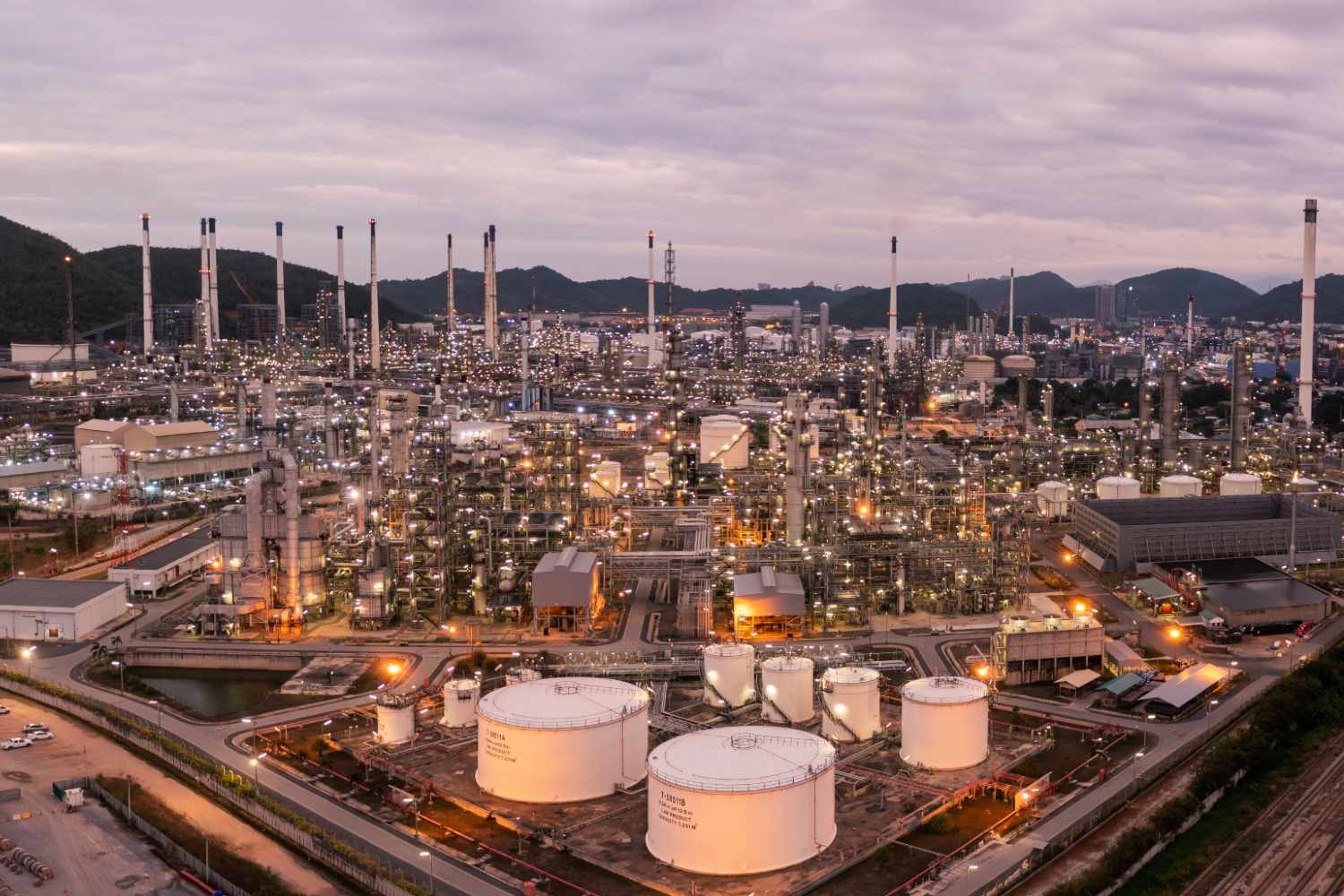
    Mauritania has completed the first phase of the expansion of its liquid fuel storage infrastructure in Nouakchott as part of efforts to reduce vulnerability to volatile global fuel prices amid an already constrained domestic electricity market. The government announced that 23,000 m3 of new storage tanks are now operational and a further 100,000 m3 of capacity is under construction, increasing total storage capacity from about 60,000 m3 previously to about 123,000 m3. The expansion comes at a time when Africa’s fuel supply system is feeling the strain of global disruption from the ongoing U.S.-Israel war with Iran, reducing shipments through the Strait of Hormuz, increasing oil prices and reducing fuel stocks across the continent.

    Mauritania, which has been a hydrocarbon producer since 2024, has an opportunity to transition from an import-dependent model to a domestic energy buffer and interconnected electricity grid. Expanding hydrocarbon production could strengthen energy security, increase the predictability of electricity demand for industrial and transport purposes, and lay the foundation for increased regional trade with neighboring countries such as Senegal.

    Mauritania’s fuel crisis meets gas-to-power opportunity

    Mauritania’s power sector remains heavily dependent on imported petroleum products, including diesel and heavy oil, for power generation. Approximately 98% of the country’s electricity comes from thermal power plants, with a total installed capacity of approximately 500 MW, of which only approximately 20% comes from renewable sources. By 2025, approximately 57% of the population will have access to electricity, creating a disparity between urban and rural areas. Before the conflict in the Middle East, records showed a lack of reliable power generation and frequent power outages, highlighting the vulnerability of power grids when fuel supplies tighten or costs soar.

    Despite Mauritania’s dependence on imported fuels, it has domestic hydrocarbon resources that could be exploited to alleviate future energy crises. The Greater Tortu Ahmaim (GTA) offshore gas project, jointly developed with international oil companies BP and Kosmos Energy, has sustained LNG production of 2.7 million tonnes per year, underscoring its growing contribution to the region’s energy supply. Beyond the GTA, the offshore Bir Allah gas field contains an estimated 2.265 billion cubic meters of recoverable gas. The Banda and Tevet fields, awarded to a consortium including Taqa Arabia and GoGas Holding, are even larger, with reserves of 62.2 million m3. This positions Mauritania as a prime opportunity to develop gas power projects to power the country.

    How Mauritania can leverage regional trade to strengthen energy security

    To strengthen the country’s electricity grid and reduce the vulnerability of the electricity system, Mauritania is promoting regional energy trade. The African Development Bank’s Desert to Power program aims to establish a 225 kV interconnector, a 1,373 km long high-voltage transmission line with a transmission capacity of 600 MW, connecting the power systems of Mauritania and Mali. The interconnector is designed to connect up to 80,000 new homes in Mauritania with reliable power, helping to integrate larger scale solar power and other renewable energy into regional networks, while reducing reliance on expensive fuel-based generation.

    Another potential solution lies in Senegal. The Sangomar oil field, developed by Woodside Energy, produces approximately 100,000 barrels per day. Senegal is upgrading its SAR 2.0 refinery to increase the throughput of local crude oil, with a target annual production capacity of 4 million tonnes upon completion. This expansion will strengthen the region’s fuel self-sufficiency and open up trading opportunities for diesel, gasoline, and jet fuel. Mauritania could use this proximity to reduce its dependence on fuel imports from the UAE and reduce costs by sourcing fuel within the region.

    Expanding Mauritania’s hydrocarbon production and regional interconnections could open new trade possibilities. Beyond oil and gas, the country now has opportunities to develop alternative energy sources such as green hydrogen and solar power, establishing itself as a resilient and diverse energy hub in West Africa.

    doubles electricity fuel Global Market Mauritania protect shocks storage
    Share. Facebook Twitter Pinterest LinkedIn Reddit WhatsApp Telegram Email
    Previous ArticleThe secret to achieving sustainable economic growth
    Next Article Drone bases and defense hubs: how Turkish investors are shaping the future of security in the Democratic Republic of the Congo
    Xsum News
    • Website

    Related Posts

    IAEA supports Rwanda’s nuclear program as SMR targets 70% of national power

    March 26, 2026

    Institutional investors take control of Africa’s growing emerging debt market

    March 25, 2026

    Strait of Hormuz closure puts oil prices above $100 in March, testing Africa’s oil financing model

    March 25, 2026
    Leave A Reply Cancel Reply

    Top Posts

    African Development Bank Group and Nedbank Group sign multi-billion rand funding partnership to transform housing access and boost African trade

    December 19, 202529 Views

    A United Continent on the Move: Ambassador Kouyateh’s Call for an African Logistics Renaissance

    November 20, 202529 Views

    Eni secures multi-million dollar loan for African FLNG project

    January 26, 202622 Views

    African Development Fund and WHO collaborate to save Sudan’s health system

    November 17, 202522 Views
    Don't Miss
    Sustainability & Climate-Resilient Infrastructure April 14, 2026

    Building South Africa’s next chapter through sustainable infrastructure

    As countries and industries move from ambition to implementation of sustainability strategies, South Africa is…

    Southern Africa Eco-Infrastructure Summit 2026 accelerates sustainable infrastructure and green real estate investment across the southern region

    Sustainable infrastructure strengthens South Africa’s future

    Initial 11 rail operators selected for 41 routes as South Africa takes major step in opening up freight rail to private sector

    Stay In Touch
    • Twitter
    • Instagram
    • YouTube
    • LinkedIn
    • TikTok

    Stay Updated.

    Get the latest Africa-focused business & infrastructure news and more directly to your inbox.

    About Us
    About Us

    Xsum News is Africa’s digital window into the future of business. We tell stories of innovation, enterprise, and investment that are shaping the continent’s economic rise. African Business, Added Up.

    X (Twitter) Instagram YouTube LinkedIn TikTok
    Our Picks

    Building South Africa’s next chapter through sustainable infrastructure

    Southern Africa Eco-Infrastructure Summit 2026 accelerates sustainable infrastructure and green real estate investment across the southern region

    Sustainable infrastructure strengthens South Africa’s future

    Most Popular

    African Development Bank praises Algeria’s development model, aims to replicate its success across the continent

    Considering the redefinition of African capital by UBA and Arauba

    G20 Energy Investment Forum brings together Africa’s top finance, insurance and technology leaders

    © 2026 Xsum News. All Rights Reserved.
    • 🌍 About Xsum News
    • 📬 Contact us
    • Privacy Policy
    • Terms & Conditions
    • Disclaimer

    Type above and press Enter to search. Press Esc to cancel.