


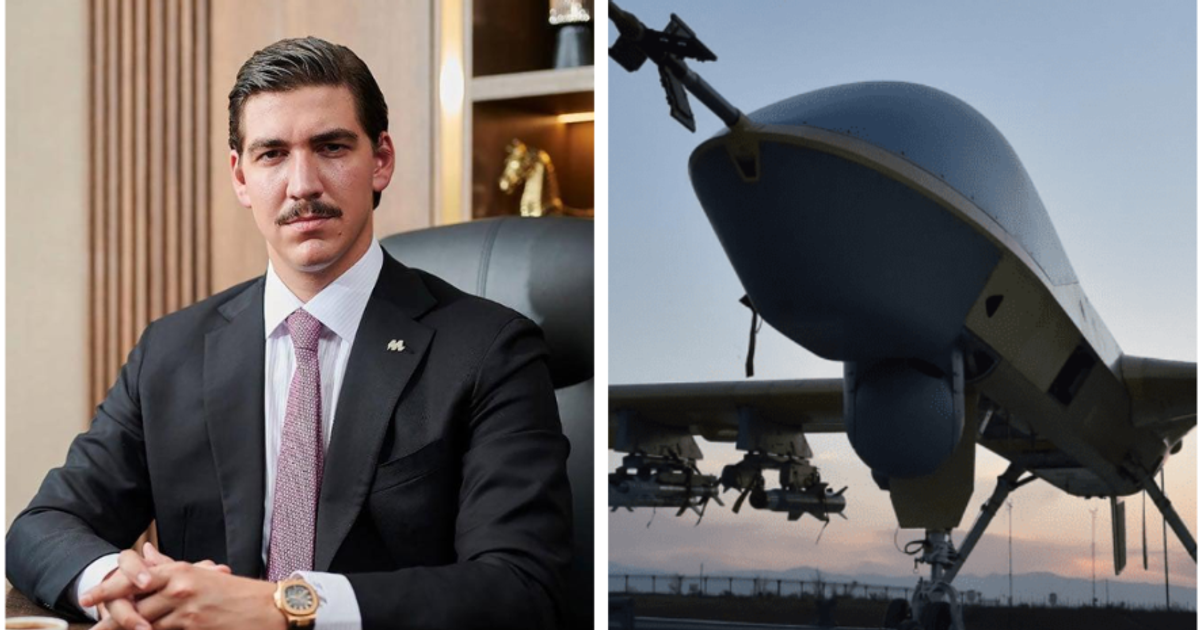
Turhan Mildon, known for leading Mirvest’s ambitious expansion into Central Africa, first gained fame for delivering high-profile infrastructure projects, including the Kinshasa Financial Center, a landmark US$290 million project that will house key government institutions.
Mildon has a reputation for combining rapid execution with large-scale development, and has now pivoted to the defense sector, strengthening both its business and strategic influence in the Democratic Republic of the Congo.
Mildon’s latest undertakings include securing a strategic contract worth approximately $67 million with the Armed Forces of the Democratic Republic of the Congo (FARDC) to build a drone launch base in Kisangani, signaling a move toward modernizing Kinshasa’s military capabilities, according to Africa Intelligence Agency.
The project comes amid rising tensions in the eastern province, where the M23 rebel group, said to be backed by Rwanda, continues to challenge Congolese authorities and displace thousands of civilians.
Flying Drones: Changing Modern Warfare in Africa
Drones and other aerial platforms have become a key element of surveillance and rapid response in these conflict areas.
Across Africa, drones are changing the way wars are fought. Unmanned aerial vehicles (UAVs) provide real-time surveillance, precise targeting, and rapid response, allowing militaries to monitor remote areas and take action without putting personnel at risk.
Other countries are following suit. Nigeria is using drones against Boko Haram and ISWAP, and Ethiopia, Egypt, and Morocco are expanding their fleets for border security and strategic operations.
Drones are cost-effective, force-multiplying tools that enable rapid modernization of African forces, often with the benefit of foreign training and technology partnerships from Turkey, Israel, and the United States.
In conflicts, such as the looming tensions between the Democratic Republic of the Congo and Rwanda, drones are no longer an adjunct but a core part of military planning, shaping how African forces defend territory, gather intelligence, and respond to rebel threats in real time.
Regional and international realities

The imminent threat of a new conflict with Rwanda has led Kinshasa to prioritize military infrastructure, particularly in its strategic northern and eastern cities.
A recent drone attack in Goma, North Kivu, Democratic Republic of the Congo, killed three people, including a French UNICEF worker.
The city, a key regional hub on the border with Rwanda, has been under the control of the M23 rebel group since January 2025. The United Nations Stabilization Mission in the Democratic Republic of the Congo (MONUSCO) condemned the attack and warned of the increased risk to civilians from drone warfare.
The Kisangani drone base is part of a broader effort to modernize the FARDC and maintain a credible deterrent against insurgent infiltration.
While Congo strengthens its defenses, the United States has played a pivotal role in facilitating peace talks between the DRC and Rwanda, encouraging the withdrawal of foreign troops and imposing sanctions on military leaders in Kigali to curb support for the M23.
While these diplomatic efforts have helped alleviate the immediate threat, they emphasize that long-term stability requires both strong military strength and sustained regional diplomacy.
Kinshasa’s defense push, coupled with Mildon’s expanding footprint in both infrastructure and military projects, reflects a strategic realignment, a recognition that Africa’s largest country needs to combine modernized capabilities with international engagement to secure its borders and assert regional influence.
