


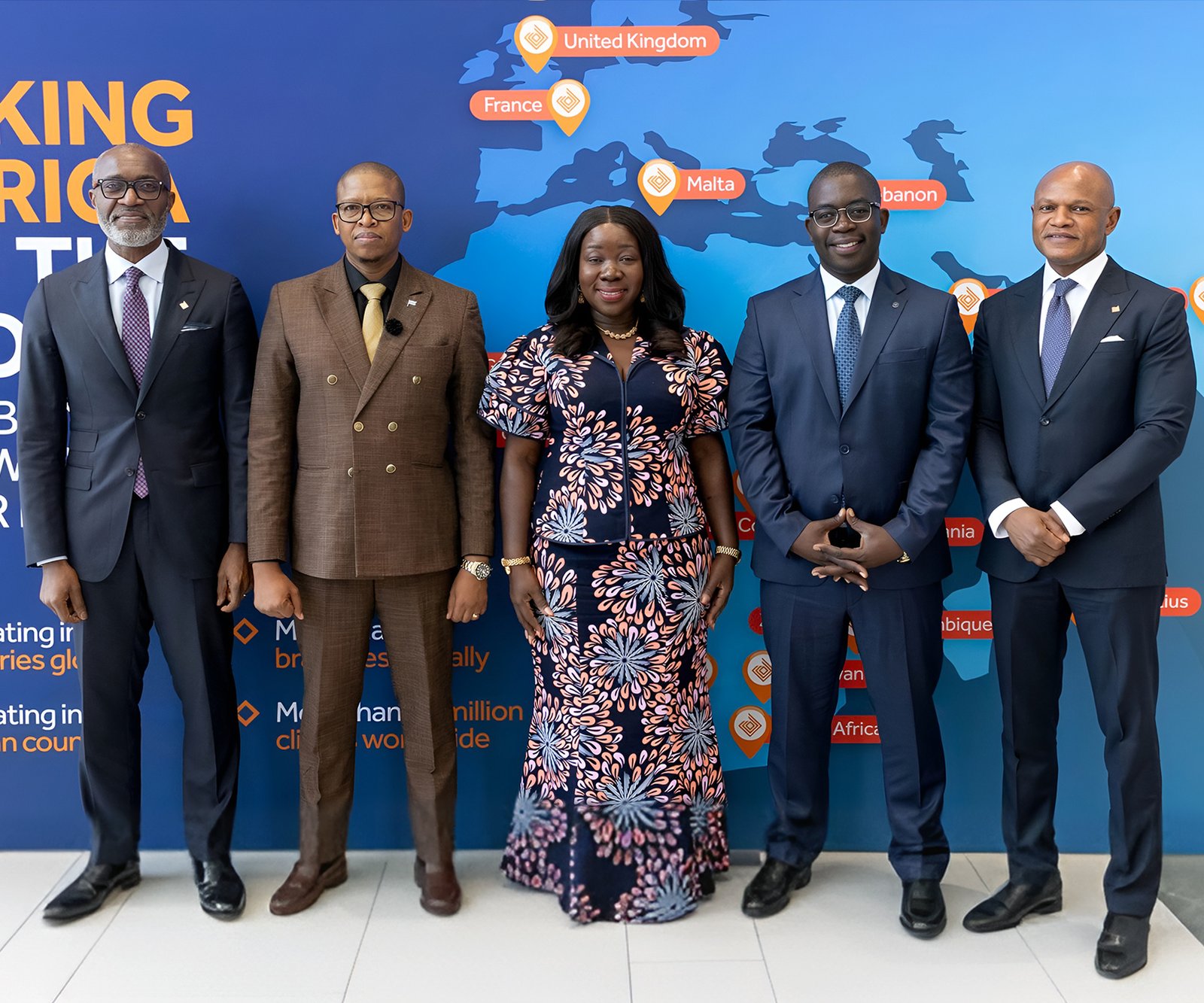
Roosevelt Ogbonna, Managing Director and CEO of Access Bank PLC, and other participants at the Access Bank Africa Trade Conference (ATC 2026) called for increased cooperation between policymakers, financiers and businesses to accelerate intra-African trade and unlock the continent’s economic potential.
•Speaking at a conference in South Africa, Ogbonna appealed to stakeholders across the continent to go beyond dialogue and take concrete steps to strengthen trade ties between African countries.
•Africa’s share of global trade remains relatively small, as fragmented trade corridors and structural bottlenecks continue to hinder commercial growth across the continent.
•The continent’s economic transformation will depend largely on the willingness of businesses and institutions to work together more effectively.
“The reality is that Africa still controls a small portion of global trade. Corridors remain fragmented, more aspirational than functional, and too many small and medium-sized enterprises wanting to trade across Africa remain constrained,” Ogbonna said.
According to the CEO of Access Bank, this involves breaking down silos between policy makers, financial institutions and businesses. Build a trade ecosystem powered by trusted data and analytics. Developing systems that support both large companies and small and medium-sized businesses looking to expand across borders.
“We are seeing value chains emerge across agriculture, manufacturing and services, and we are seeing African brands transcending borders and building a global presence,” he added.
Ogbonna also pointed to the increasing role of technology platforms in reducing friction in areas such as payments, logistics and market access. But he acknowledged that results remain uneven across the continent, with progress concentrated in a few markets and specific trade corridors.
Private capital and the policy space
Kennedy Mbekeani, Southern Africa Director at the African Development Bank (AfDB), called for increased mobilization of private capital to finance the critical infrastructure needed to realize Africa’s full potential for trade integration.
“Mobilizing private capital remains important as many African governments are constrained by limited fiscal space and oversized balance sheets. Mobilizing capital, especially private capital, is something we need to work on,” Mbekeani said.
Policymakers are also evolving domestic policies to suit the continent’s needs and promoting policy collaboration between countries to unlock the continent’s trade potential. Botswana, for example, is reshaping its domestic outlook to become a major trade corridor.
Botswana’s Minister of Trade and Entrepreneurship, Tiloaoone Ntsima, said: “While we once described ourselves as a landlocked country, we now see ourselves as landlocked. Creating corridors to connect markets across the continent will open up new opportunities for trade and economic growth.”
To make these changes work across the continent, policymakers are coordinating more trade and investment nodes to facilitate cross-border trade.
Zambia’s Minister of Commerce and Industry, Chipoka Mulenga, said: “If we need to strengthen intra-African trade, we must intentionally develop a policy of speaking the same language between our countries. We should leverage our comparative advantages, not compete with each other.”
The African ecosystem is divided into over 50 countries and over 40 central banks, each operating under a different regulatory framework. Experiments with cross-border payments technology are underway, including trials with regional partners led by South Africa, as regulators look for ways to modernize payments infrastructure and support growing intra-African trade.
Related:
Rwanda’s trade minister says fragmented payments system is slowing African trade
