


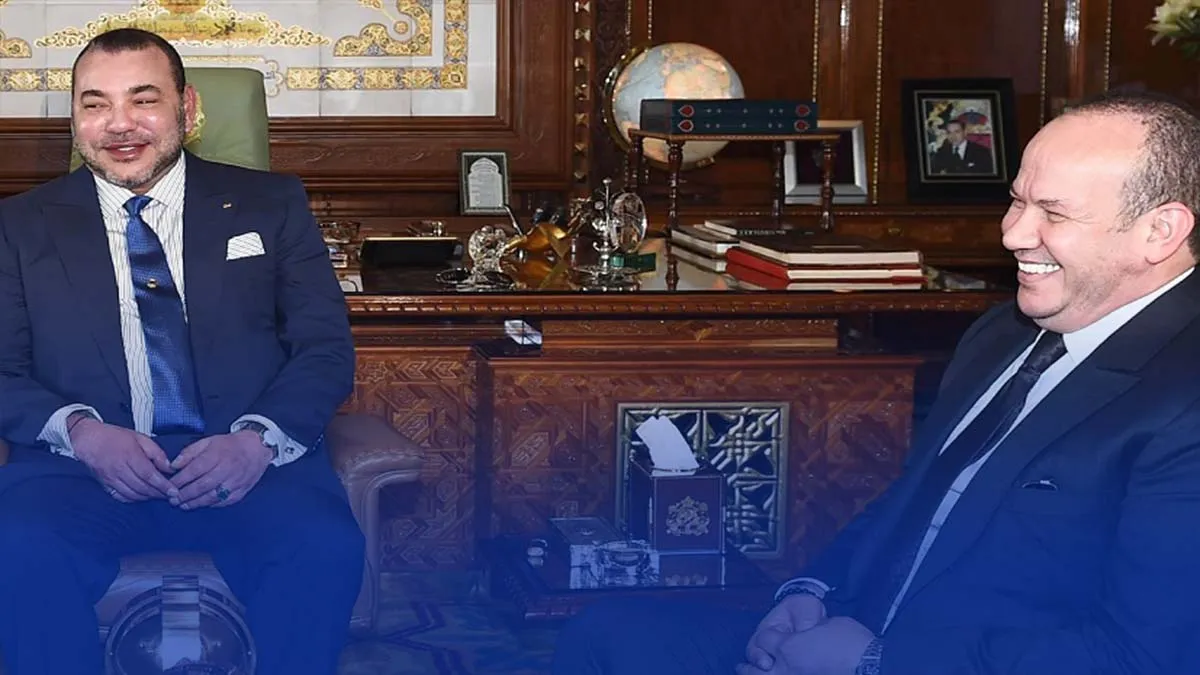
Despite rarely appearing in public, Fouad Ali el-Himma appears to be a constant presence in Morocco’s most sensitive files, from Western Sahara to partisan developments, public media, and even major international sporting events, according to the report. This ubiquity is not indicative of extraordinary administrative ability, but rather exposes structural distortions in the very concept of governance, in which the state is reduced to individuals and politics is managed through influential intermediaries rather than institutional processes.
The core danger of this model lies not in the power of royal advisers per se, but in the vacuum that such power reveals. When unelected figures are shielded from parliamentary and judicial scrutiny and become the connective tissue between security services, media, and diplomacy, the result is not a “strong state” but a hollow one, governed by networks rather than rules.
As the report recalls, the creation of the Party of Authentic Modernity (PAM) was not a normal political development. It transformed political pluralism into a controlled surface and marked a decisive moment in the taming of the partisan field. Since then, the central question has no longer been about who wins elections, but who is allowed to participate in them. In this context, politics has not been abolished. It is under protection.
The Western Sahara File, often presented as an unquestionable national consensus, further elaborates this logic. Its management by a narrow panel of advisors, far removed from genuine public debate, turns consensus into forced silence. The US recognition, the normalization agreement, and the diplomatic maneuvering within the UN Security Council are all decisions of historic proportions. But who discussed them? Who held architects accountable, and who assessed their long-term political and moral costs?
Public media could not escape this grip. As outlined in the report, the restructuring is not aimed at emancipation or professionalization, but at increasing control. As a result, the media environment is stripped of critical voices, true pluralism, and the ability to question authority—at a time of deepening social crisis and citizens increasingly being forced to seek truth from alternative and foreign platforms.
Even sport, traditionally a platform for unity and celebration, has been used as a vehicle for influence and political investment. The African Cup of Nations, the 2030 World Cup bid, and large-scale infrastructure projects are all framed as elements of “soft power” but are being pursued without transparency, public debate about priorities, or any meaningful connection between massive spending and the realities of populations suffering from rising costs and marginalization.
At its core, Africa Intelligence reveals a portrait of an entire system, not the profile of a single person. That is, a system that relies on powerful individuals rather than strong institutions, on loyalty networks rather than democratic norms, and on opacity rather than clarity. Such models may be successful in managing balance in the short term, but they quietly accumulate vulnerabilities in the long term.
In a situation characterized by the repeated absence of the royal family and rising social tensions, the question of who really rules Morocco is unavoidable. Who will decide the most important national questions? And perhaps most importantly, how long can governing from the shadows remain acceptable before it becomes a political and moral burden for a nation that claims to be moving toward modernization and stability?
A nation is not measured by the strength of its advisors, but by the strength of its organizations. And the more unaccountable power networks expand, the more the state itself will shrink, no matter how strong it may appear on the outside.
