


From mineral exploration to the world of financial services, artificial intelligence is changing the way businesses operate in Africa. One of the areas likely to be most affected by this technological revolution is one that has received relatively little attention in this context: the creative economy.
For generations, stories have been one of the most powerful tools of African people. Movies, music, and other media capture elements of storytelling to create content that is easy to understand. Now, the combination of mobile technology and artificial intelligence is changing everything, giving a new generation of creative people a seat at the table. For most parts of the world, film production was a process that required expensive equipment, training, and access to studios. Although mobile penetration is now increasing exponentially on the continent, this is no longer the case. For African creators, smartphones are more than just cameras. It’s a filmmaking tool unlike any other in recent history.
Artificial intelligence is changing everything about filmmaking, from editing and visual effects to subtitles and translation, and even the development of ideas and concepts themselves. This is an important advancement for a new generation of filmmakers in Africa and around the world.
For filmmakers in Africa and around the world, this means ideas can be produced and presented more quickly and cost-effectively than ever before.
Creativity as economic infrastructure
The global creative economy is estimated to be worth more than $2 trillion and continues to grow rapidly. Africa’s role in this economy is also expanding exponentially, driven by a combination of a growing young population and a global appetite for diverse stories and ideas. Short films in particular are playing a key role in this growth. AI has the potential to further drive this growth, especially when it comes to assessing the technical requirements of production and allowing storytellers to focus more on storytelling. But while technology continues to grow, some would argue that the true essence of art may lie in perspective rather than tools.
Digital platforms, from streaming services to social media, have created distribution channels that bypass traditional gatekeepers. Artificial intelligence has the potential to further accelerate this transformation by simplifying the technical aspects of production and allowing creators to focus on the storytelling itself. But as technology advances, the real value of creative work may lie in the perspective, not the tools.
While AI can certainly generate visuals and automate editing workflows, it cannot recreate the lived experiences that form authentic storytelling. Africa’s diverse languages, landscapes, cultures, and histories continue to be a powerful source of storytelling depth that cannot be recreated through technology alone.
Responsible innovation in the age of AI
As AI tools become more accessible, the conversation around responsible innovation becomes increasingly important. Training large AI models and running advanced computing systems requires large amounts of energy resources, raising important environmental questions.
Ongoing global climate change continues to cause adverse events, disproportionately impacting millions of people in the Global South. The energy constraints of AI and the growing adoption of this technology are causing major concerns. The creative industries can play a key role in shaping that conversation. Film and digital media continue to be powerful tools for raising awareness of environmental issues, from climate change to conservation.
When creators use AI responsibly, these technologies can support storytelling that not only entertains, but also informs and inspires action.
A new generation of storytellers
Creative platforms across the continent are beginning to explore how emerging technologies can support new forms of storytelling.
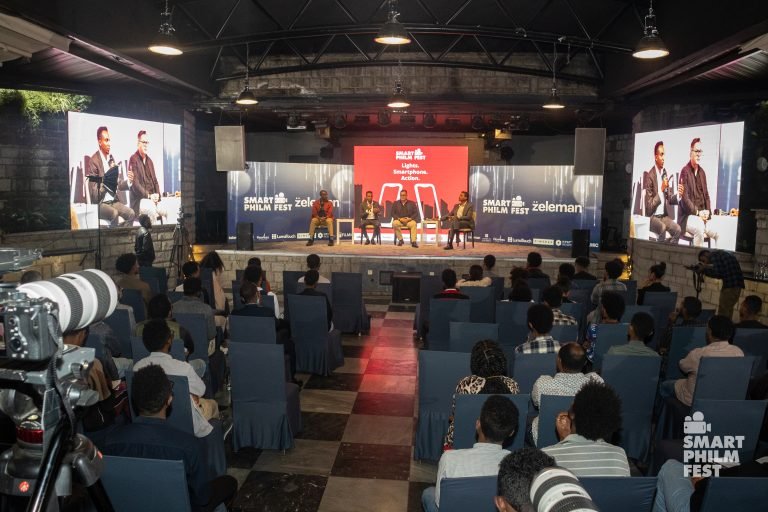
One example is CRAFT, a creative festival organized by Ethiopian creative agency Zeleman that will be held in Addis Ababa this May. The event brings together innovators in design, media and technology to explore the future of creativity in Africa.
As part of the event, SmartPhilm will showcase films shot entirely on smartphones, demonstrating how accessible technology enables creators to create compelling stories with minimal equipment.
This year’s festival also focuses on the growing intersection of technology and storytelling, inviting filmmakers to consider themes around AI, humanity, and environmental responsibility.
The future is being filmed now
Africa’s AI momentum is often measured through infrastructure investment, policy development, and startup growth. But the continent’s creative sector also represents an equally powerful frontier.
Technology can provide tools. Policies can shape the framework. Investment can accelerate innovation. But stories are still the bridge between technology and society.
As artificial intelligence continues to evolve, Africa has an opportunity to not only adopt these tools, but also shape how they are used to amplify human creativity, preserve cultural stories, and address global challenges.
The next wave of filmmakers may not come from traditional studios.
It may also be sent from your smartphone.
And increasingly they may come from Africa.
Article written by Melon Daniel
