


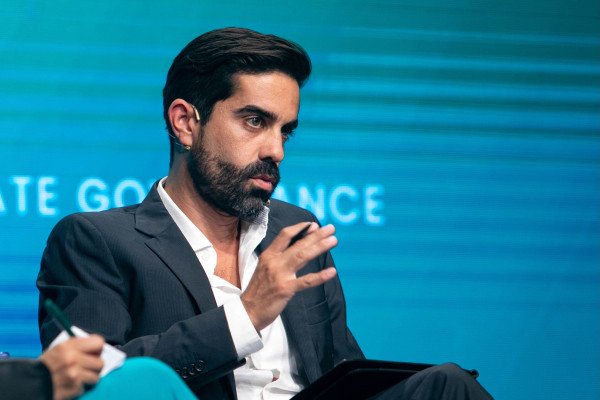
Written by João Gaspar Marques — APO Group Strategic Advisors Executive Director (https://APO-opa.com).
There are costs that don’t appear on the balance sheet, but they are among the most significant costs incurred by companies operating in Africa. I call this the “recognition tax.” This is a financial and strategic penalty paid by organizations that set prices in African markets based on assumptions rather than intelligence.
It is, in every sense of the word, a tax on ignorance. And unlike most taxes, this one is completely avoidable.
structure
Recognition taxes work on a simple but destructive logic. In the absence of reliable, detailed market intelligence, decision makers will default to following the available narrative. And the available narratives about Africa are often wrong in their generalizations. It is a painfully outdated tragedy that the continent continues to be treated as a unified risk landscape, rather than 54 distinct countries with their own regulatory frameworks, political cultures, growth trajectories, and investment dynamics. The macro overshadows the micro, but there are opportunities in the micro.
Consider its geography. Investing in France is different from investing in Finland. The United States is not Mexico. So why are Benin and Botswana, which are as physically, politically, economically and culturally distant as Belgium and Belarus, perceived under the same optics? Yet that is exactly what we see time and time again in investment discussions from London to New York.
The implications of this tax are very real. Projects that do not guarantee a premium will increase the cost of accessing capital. Decisions are delayed while companies wait for clear information not available through general analysis. First-mover advantage, objectively the most sought-after advantage in developing economies, is being blindly surrendered to competitors with greater intelligence and market understanding. For companies with big expansions and ambitions in Africa, perceived taxes are a structural drag on performance and profits.
read the numbers
In February 2025, the African Development Bank commissioned Moody’s Analytics to assess 14 years of infrastructure investment performance across the region. Africa’s loss rate was 1.7%, the lowest in the world. Latin America recorded around 13%. Eastern Europe, 10%. By objective standards, Africa is one of the most reliable infrastructure investment destinations on the planet.
However, the cost of capital across African markets remains three to four times higher than comparable regions. Investors are demanding premiums that are not justified by the facts on the ground, and the assets they transfer are being acquired by people who read the numbers rather than the headlines.
Tony Elumelu, whose investment portfolio spans four continents in power, financial services and healthcare, says unequivocally: “Nowhere else in Africa can you get a return on investment like this.” Competitive advantage belongs to those who recognize opportunities while others recognize risks.
what it actually looks like
Developers evaluating projects in East Africa find currency fluctuations, complex political transitions, and regulatory environments difficult to understand at first. The standard response is to demand a higher return, shorten the loan term, or reverse the decision altogether. It can be uncompetitive, time-consuming, and impossible to trade. Competitors with on-the-ground intelligence see the same market differently. The country has maintained continuity of institutions over successive governments. The local partner has a strong operational track record. Local financing partners are willing to co-invest. Projects progress ahead of the market and on better terms. Recognition tax has been paid by the first company to the second company.
This is not a hypothesis. Helios Investment Partners, one of Africa’s most successful private equity funds, has built a portfolio of more than $3 billion by tapping into markets that the global consensus considered too risky and reading the market for what it is. Kenya shows what happens when this digital divide closes. Five years of regulatory reforms have helped the country rise 52 places on the World Bank’s Ease of Doing Business index. Foreign investment also continued on a consistent and large scale. The risk did not go away. That was understood.
This pattern repeats across the continent. Markets that were once considered high-risk by international capital are, on closer inspection, still markets that have not been properly read. Investors who watched closely enough to see the difference earned returns that reflected the benefits of doing so. Those who hesitated later arrived at higher valuations and paid the full recognition tax.
broader implications
Recognition tax is even more complex. Delays in investment mean delays in market development, reinforcing the perception of unpreparedness and delaying further investment. The gap between Africa’s perceived risk profile and actual commercial fundamentals will not close on its own. It ends when informed capital enters the market and changes the consensus. That’s exactly when the opportunity for asymmetric gains starts to narrow.
The African Continental Free Trade Area represents a $3.4 trillion market and a population of 1.5 billion people. This continent contains important minerals on which the global energy transition depends. The question is not whether capital will ultimately flow to these opportunities. it is. The question is who will take their place before generalized knowledge deprives them of opportunities for profit.
different approach
Companies that consistently perform well in Africa share common characteristics. That means treating market intelligence as a major investment, not a nice-to-have. These distinguish between structural risks, which need to be priced, and noise, which needs to be filtered out. They understand that the information gap between perception and reality is not a permanent feature of African markets. This is a temporary condition and the first person to close will be rewarded. Bridging this gap is exactly why we designed the APO Group advisory practice.
A perceived tax is also a perceived premium. The same asymmetry that punishes those without information rewards those with sufficient information. For investors and corporate decision makers who are ready to engage with local markets at the level of detail required for strategic decision-making, Africa offers something that is becoming increasingly rare in global markets: a true information advantage.
The opportunity was always there. Edge is for those who are lazy to look at.
Distributed by APO Group on behalf of APO Group Insights.
Media contact:
marie@apo-opa.com
About APO Group:
Founded in 2007 by Nicolas Pompigne-Mognard, APO Group is a communications consultancy built for performance, combining strategic advice, on-the-ground execution and guaranteed visibility across all African markets.
Winner of multiple international awards, including SABER, Davos Communications and World Business Outlook awards, APO Group partners with organizations globally and in Africa to deliver effective communications through strategy, execution and measurable visibility.
Our founder’s role as an advisor to international organizations strengthens APO Group’s access to decision makers and strengthens our role as the continent’s most connected communications consultancy. Clients include Canon, Emirates, Nestlé, NFL, Afreximbank, African Development Bank Group, GITEX Global, Royal African Society and United Nations Development Program (UNDP).
