Close Menu
Xsum NewsXsum News

    Stay Updated.

    Get the latest Africa-focused business & infrastructure news and more directly to your inbox.

    What's Hot

    Building South Africa’s next chapter through sustainable infrastructure

    Southern Africa Eco-Infrastructure Summit 2026 accelerates sustainable infrastructure and green real estate investment across the southern region

    Sustainable infrastructure strengthens South Africa’s future

    Facebook X (Twitter) Instagram
    Trending
    • Building South Africa’s next chapter through sustainable infrastructure
    • Southern Africa Eco-Infrastructure Summit 2026 accelerates sustainable infrastructure and green real estate investment across the southern region
    • Sustainable infrastructure strengthens South Africa’s future
    • Initial 11 rail operators selected for 41 routes as South Africa takes major step in opening up freight rail to private sector
    • Risk mitigation focused as SA opens rail and port networks to private participants
    • AIHS partners with Federal Department of Housing and Urban Development at 18th Housing Show
    • AIHS mourns Raila Odinga and celebrates his work in affordable housing and urban development
    • AIIB expands investment in Africa with first sub-Saharan infrastructure project
    X (Twitter) Instagram YouTube LinkedIn TikTok
    Xsum NewsXsum News
    • African Development Bank
    • Africa Finance Corporation
    • All Africa – Construction & Infrastructure
    • Africa Intelligence
    • Construct Africa
    • More
      • Mining Review Africa
      • Energy Capital Power
      • Sustainability & Climate-Resilient Infrastructure
      • Private-Sector Infrastructure Players
      • Urban Development & Housing
    Xsum NewsXsum News
    You are at:Home»African Development Bank»Why laws, not aid, drive growth – The Sun Nigeria
    African Development Bank

    Why laws, not aid, drive growth – The Sun Nigeria

    Xsum NewsBy Xsum NewsMarch 25, 2026No Comments4 Mins Read1 Views
    Facebook Twitter Pinterest Telegram LinkedIn Tumblr Email Reddit
    Share
    Facebook Twitter LinkedIn Pinterest WhatsApp Email

    Written by Chinenye Anufolo

    A chorus of African policy and legal experts is calling for a decisive shift in the continent’s development strategy, arguing that strong legal frameworks, not increased foreign aid, will determine Africa’s long-term economic trajectory.

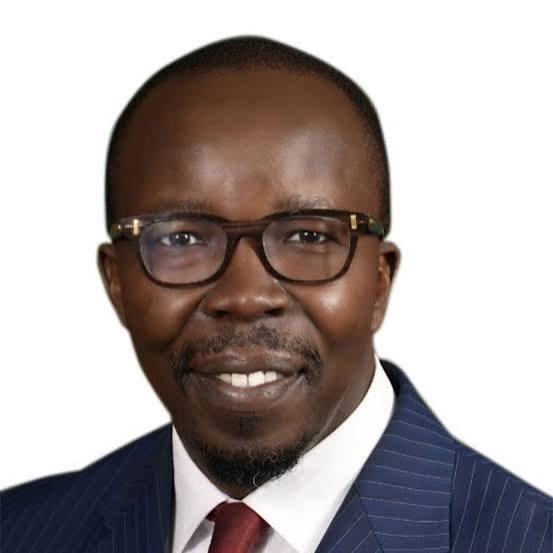
    At the forefront of this conversation is Eric Gumbo, partner at G&A Advocates LLP, who cites Kenya as a prime example of how legal innovation can reshape national fiscal models and free up domestic capital.

    For decades, Africa’s development story has been supported by external funding from multilateral institutions such as the World Bank and IMF to bilateral donors and debt relief programs. While these mechanisms have played an important role, experts say they have also entrenched cycles of dependency that limit sustainable growth.

    Gambo argued that the real constraint was not a lack of capital, but the absence of a strong and predictable legal system that could transform available capital into viable investments.
    “What is missing is not money, but investable projects backed by legal certainty,” he said.
    According to the African Development Bank, Africa faces an annual infrastructure financing gap of between $68 billion and $108 billion. But analysts say global capital markets are awash with liquidity, much of which is bypassing Africa due to regulatory uncertainty, weak contract enforcement and a changing policy environment.

    In response, Kenya introduced a series of fundamental legal reforms aimed at mobilizing domestic resources. Central to this effort is the proposed KSh5 trillion National Infrastructure Fund (NIF), which aims to channel pension funds, private equity and retail investments into large-scale infrastructure projects.

    Unlike traditional sovereign debt, the fund is structured to absorb key legal and sovereign risks at the project level, reducing uncertainty and lowering the cost of capital for investors.
    Industry observers say the model has the potential to change the way infrastructure is financed across Africa by creating a more stable and transparent investment environment. By acting as a buffer between state and private capital, the framework allows diverse stakeholders, including development finance institutions, pension managers and private investors, to participate without exposing themselves to undue risk.

    The initiative also aligns with broader continental efforts to deepen capital markets and reduce dependence on external debt.
    Gambo noted that Kenya’s approach reflects lessons from countries such as Rwanda, Botswana and Mauritius, where strong institutions and regulatory clarity have played a central role in economic transformation.

    He further emphasized the importance of public participation in development, noting the recent partial listing of the Kenya Pipeline Company on the Nairobi Stock Exchange as a milestone in the democratization of wealth.
    “Development becomes inclusive and sustainable when citizens are involved in national infrastructure,” he said.
    Plans to establish a sovereign wealth fund with an intergenerational focus are also expected to strengthen this model by ensuring that current profits are reinvested in future development priorities.

    But officials warn that changing the law alone is not enough. Effective governance, transparency, and isolation from political interference remain important to ensure that such frameworks achieve their intended outcomes.
    Experts also highlighted the evolving role of the legal profession in Africa’s development agenda. Legal practitioners are increasingly expected to go beyond just interpreting the law to designing and shaping the frameworks that enable investment, innovation and economic growth.
    “We need to move from a reactive legal practice to a proactive legal architecture that supports development,” Gambo said, adding that incremental and continuous improvement is more effective than waiting for a perfect system.

    Global development data highlights the risks. Some estimates suggest that a 10% increase in infrastructure investment could boost long-term GDP growth in emerging economies by up to 2 percentage points, directly impacting employment, health and education outcomes.
    Analysts say the case for African economies’ need for homegrown solutions has become more urgent as they weather rising debt pressures and changes in the global financial landscape.

    Gambo argues that the continent’s path to prosperity lies in leveraging its unique resources through strong institutions and innovative legal frameworks.
    “Africa does not need to borrow its way to prosperity,” he said. “We need to build a path to get there, leveraging the assets we already have and the institutions we must have the courage to create.”

    aid Drive growth laws Nigeria Sun
    Share. Facebook Twitter Pinterest LinkedIn Reddit WhatsApp Telegram Email
    Previous ArticleFG strengthens collaboration with private sector to boost education investment
    Next Article Strait of Hormuz closure puts oil prices above $100 in March, testing Africa’s oil financing model
    Xsum News
    • Website

    Related Posts

    Companies pledge $100 million to help electrify Africa

    March 26, 2026

    TAAT holds strategic meeting to accelerate agricultural transformation across Africa – EnviroNews

    March 25, 2026

    The secret to achieving sustainable economic growth

    March 25, 2026
    Leave A Reply Cancel Reply

    Top Posts

    African Development Bank Group and Nedbank Group sign multi-billion rand funding partnership to transform housing access and boost African trade

    December 19, 202529 Views

    A United Continent on the Move: Ambassador Kouyateh’s Call for an African Logistics Renaissance

    November 20, 202529 Views

    Eni secures multi-million dollar loan for African FLNG project

    January 26, 202622 Views

    African Development Fund and WHO collaborate to save Sudan’s health system

    November 17, 202522 Views
    Don't Miss
    Sustainability & Climate-Resilient Infrastructure April 14, 2026

    Building South Africa’s next chapter through sustainable infrastructure

    As countries and industries move from ambition to implementation of sustainability strategies, South Africa is…

    Southern Africa Eco-Infrastructure Summit 2026 accelerates sustainable infrastructure and green real estate investment across the southern region

    Sustainable infrastructure strengthens South Africa’s future

    Initial 11 rail operators selected for 41 routes as South Africa takes major step in opening up freight rail to private sector

    Stay In Touch
    • Twitter
    • Instagram
    • YouTube
    • LinkedIn
    • TikTok

    Stay Updated.

    Get the latest Africa-focused business & infrastructure news and more directly to your inbox.

    About Us
    About Us

    Xsum News is Africa’s digital window into the future of business. We tell stories of innovation, enterprise, and investment that are shaping the continent’s economic rise. African Business, Added Up.

    X (Twitter) Instagram YouTube LinkedIn TikTok
    Our Picks

    Building South Africa’s next chapter through sustainable infrastructure

    Southern Africa Eco-Infrastructure Summit 2026 accelerates sustainable infrastructure and green real estate investment across the southern region

    Sustainable infrastructure strengthens South Africa’s future

    Most Popular

    African Development Bank praises Algeria’s development model, aims to replicate its success across the continent

    Considering the redefinition of African capital by UBA and Arauba

    G20 Energy Investment Forum brings together Africa’s top finance, insurance and technology leaders

    © 2026 Xsum News. All Rights Reserved.
    • 🌍 About Xsum News
    • 📬 Contact us
    • Privacy Policy
    • Terms & Conditions
    • Disclaimer

    Type above and press Enter to search. Press Esc to cancel.