Close Menu
Xsum NewsXsum News

    Stay Updated.

    Get the latest Africa-focused business & infrastructure news and more directly to your inbox.

    What's Hot

    Mining Review Africa launches French and Portuguese versions to bridge regional digital divide

    Building South Africa’s next chapter through sustainable infrastructure

    Southern Africa Eco-Infrastructure Summit 2026 accelerates sustainable infrastructure and green real estate investment across the southern region

    Facebook X (Twitter) Instagram
    Trending
    • Mining Review Africa launches French and Portuguese versions to bridge regional digital divide
    • Building South Africa’s next chapter through sustainable infrastructure
    • Southern Africa Eco-Infrastructure Summit 2026 accelerates sustainable infrastructure and green real estate investment across the southern region
    • Sustainable infrastructure strengthens South Africa’s future
    • Initial 11 rail operators selected for 41 routes as South Africa takes major step in opening up freight rail to private sector
    • Risk mitigation focused as SA opens rail and port networks to private participants
    • AIHS partners with Federal Department of Housing and Urban Development at 18th Housing Show
    • AIHS mourns Raila Odinga and celebrates his work in affordable housing and urban development
    X (Twitter) Instagram YouTube LinkedIn TikTok
    Xsum NewsXsum News
    • African Development Bank
    • Africa Finance Corporation
    • All Africa – Construction & Infrastructure
    • Africa Intelligence
    • Construct Africa
    • More
      • Mining Review Africa
      • Energy Capital Power
      • Sustainability & Climate-Resilient Infrastructure
      • Private-Sector Infrastructure Players
      • Urban Development & Housing
    Xsum NewsXsum News
    You are at:Home»More»Energy Capital Power»Europe’s latest gas shock puts African LNG in the spotlight again
    Energy Capital Power

    Europe’s latest gas shock puts African LNG in the spotlight again

    Xsum NewsBy Xsum NewsMarch 17, 2026No Comments4 Mins Read0 Views
    Facebook Twitter Pinterest Telegram LinkedIn Tumblr Email Reddit
    Share
    Facebook Twitter LinkedIn Pinterest WhatsApp Email

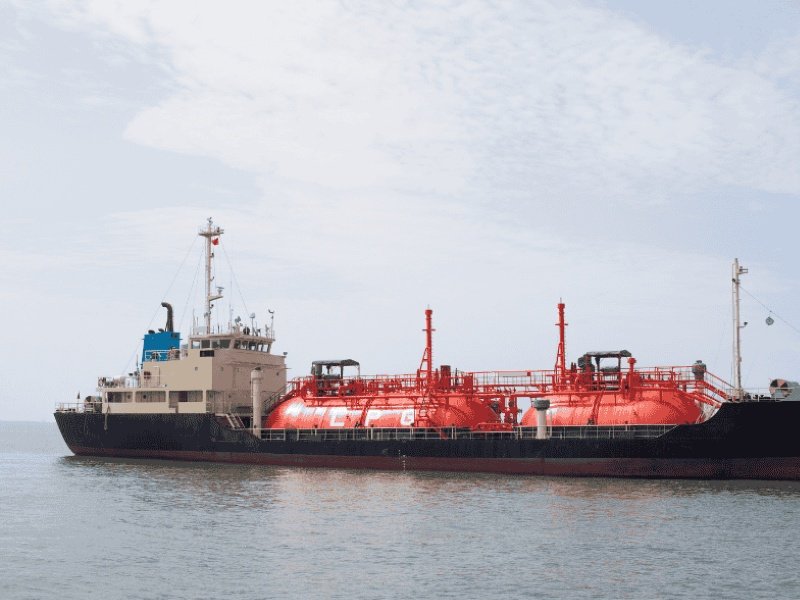
    The European Union (EU) gas market is once again attracting attention. The new disruptions have highlighted how the EU remains exposed to supply bottlenecks, after three years of a shift away from Russian gas following Russia’s invasion of Ukraine. The recent closure of Qatar’s Ras Laffan LNG export facility, which handles about 20% of global LNG exports, following an Iranian drone attack has curbed shipments and sent European gas prices soaring, while inventories remain at about 30% of capacity as countries prepare for winter refueling. This unfolded amid tensions in the Strait of Hormuz, through which 20% of global oil and LNG trade passes, further tightening global energy flows.

    Although the European Commission insists there is no immediate supply shortage, benchmark prices for Dutch TTF gas hubs have soared by more than 50% as supply expectations tighten. Europe now needs to secure additional cargo (an estimated 700 LNG shipments this summer) and has an urgent need to diversify away from centralized sources. In this context, African gas resources and new export projects are re-emerging as a strategic element in Europe’s supply equation.

    Supply shortage in Europe: scramble triggered by turmoil in Qatar

    European strategies have reshaped the import profile. The EU currently sources its gas via LNG, which accounts for 41% of the EU’s LNG imports in recent years, as pipeline gas from Russia will be completely cut by 2027. The United States has emerged as a leading LNG supplier, supplying 58% of Europe’s LNG imports in 2025, with Norway supplying 30% of pipeline imports and North Africa 13%.

    However, relying on a limited number of suppliers comes with risks. Qatar, which accounts for 8% of the EU’s total LNG imports, has seen its exports plummet since the facility was shut down, forcing Europe to compete with Asian buyers for available cargo. This caused LNG prices to rise sharply in the global spot market.

    Certain countries in the EU are more at risk than others. Belgium receives 4.3 bcm and Italy 6.5 bcm from Qatar’s LNG alone. Meanwhile, storage levels vary widely across the region, increasing short-term risks. These disparities mean that countries with low storage volumes and high dependence on Qatari LNG face significant pressure to secure alternative cargoes on the global spot market, leaving importers vulnerable to price fluctuations and supply tightness.

    Can Africa unlock Europe’s gas diversification strategy?

    As Europe seeks stable gas alternatives, Africa has an advantage. In 2025, North Africa exported a total of approximately 41 billion bcm of natural gas to Europe. Algeria remains a cornerstone, shipping tens of billions of cubic meters a year to Spain and Italy via pipelines such as Medgas. Although production is modest due to internal fluctuations, Libya is contributing to Europe through the GreenStream pipeline.

    In West Africa, Nigeria accounts for about 5% of the EU’s LNG imports, or about 1.9bcm. Emerging projects such as Greater Tortue Armayim LNG in Senegal and Mauritania and Barein in Ivory Coast could provide new corridors with forecast capacity of millions of tonnes per year.

    This existing supply, coupled with geographical proximity, established export infrastructure and a growing project pipeline in Senegal and Mauritania, aligns with Europe’s broader diversification agenda and reduces dependence on distant sources of supply.

    European countries illustrate the importance of diversification. Portugal has been restructuring its LNG procurement strategy, gradually reducing its dependence on traditional suppliers. In 2024, Portugal would import 96% of its LNG, Nigeria would supply 51% of that volume, and the United States would supply about 40%. This diversified portfolio has helped insulate the country from recent geopolitical supply shocks. Spain followed a similar path. In 2025, US LNG alone will account for around 35% of Spain’s gas imports, while Algerian pipeline gas remains a major complementary source.

    For investors, these national strategies demonstrate that a broad and geographically diversified supplier base can reduce exposure to geopolitical turmoil, stabilize markets, and create a more predictable energy cost environment. As Europe reevaluates its security of supply, African countries could play an increasing role in strengthening the continent’s long-term diversification strategy.

    African Europes Gas latest LNG puts shock Spotlight
    Share. Facebook Twitter Pinterest LinkedIn Reddit WhatsApp Telegram Email
    Previous ArticleRockefeller Foundation commits $10 million to advance Africa’s Mission 300 electrification program
    Next Article Anthem begins construction of 475 MW Notsi solar power project in South Africa, with future BESS plans
    Xsum News
    • Website

    Related Posts

    IAEA supports Rwanda’s nuclear program as SMR targets 70% of national power

    March 26, 2026

    Strait of Hormuz closure puts oil prices above $100 in March, testing Africa’s oil financing model

    March 25, 2026

    Mauritania doubles fuel storage to protect electricity market from global shocks

    March 25, 2026
    Leave A Reply Cancel Reply

    Top Posts

    African Development Bank Group and Nedbank Group sign multi-billion rand funding partnership to transform housing access and boost African trade

    December 19, 202529 Views

    A United Continent on the Move: Ambassador Kouyateh’s Call for an African Logistics Renaissance

    November 20, 202529 Views

    Eni secures multi-million dollar loan for African FLNG project

    January 26, 202622 Views

    African Development Fund and WHO collaborate to save Sudan’s health system

    November 17, 202522 Views
    Don't Miss
    Mining Review Africa April 17, 2026

    Mining Review Africa launches French and Portuguese versions to bridge regional digital divide

    670 VUKA Group’s flagship publication, Mining Review Africa, this week launched a French and Portuguese…

    Building South Africa’s next chapter through sustainable infrastructure

    Southern Africa Eco-Infrastructure Summit 2026 accelerates sustainable infrastructure and green real estate investment across the southern region

    Sustainable infrastructure strengthens South Africa’s future

    Stay In Touch
    • Twitter
    • Instagram
    • YouTube
    • LinkedIn
    • TikTok

    Stay Updated.

    Get the latest Africa-focused business & infrastructure news and more directly to your inbox.

    About Us
    About Us

    Xsum News is Africa’s digital window into the future of business. We tell stories of innovation, enterprise, and investment that are shaping the continent’s economic rise. African Business, Added Up.

    X (Twitter) Instagram YouTube LinkedIn TikTok
    Our Picks

    Mining Review Africa launches French and Portuguese versions to bridge regional digital divide

    Building South Africa’s next chapter through sustainable infrastructure

    Southern Africa Eco-Infrastructure Summit 2026 accelerates sustainable infrastructure and green real estate investment across the southern region

    Most Popular

    African Development Bank praises Algeria’s development model, aims to replicate its success across the continent

    Considering the redefinition of African capital by UBA and Arauba

    G20 Energy Investment Forum brings together Africa’s top finance, insurance and technology leaders

    © 2026 Xsum News. All Rights Reserved.
    • 🌍 About Xsum News
    • 📬 Contact us
    • Privacy Policy
    • Terms & Conditions
    • Disclaimer

    Type above and press Enter to search. Press Esc to cancel.