Close Menu
Xsum NewsXsum News

    Stay Updated.

    Get the latest Africa-focused business & infrastructure news and more directly to your inbox.

    What's Hot

    Glade transforms fragrance into fashion with Make Africa Bloom event

    Centum RE leads the future of East African cities

    Experts highlight growing health concerns in Africa’s urban areas

    Facebook X (Twitter) Instagram
    Trending
    • Glade transforms fragrance into fashion with Make Africa Bloom event
    • Centum RE leads the future of East African cities
    • Experts highlight growing health concerns in Africa’s urban areas
    • How adaptive reuse can solve urban development challenges
    • How South African cities are rebuilding affordable housing
    • Sustainable infrastructure to fight climate change
    • China’s key minerals strategy in Africa – Africa Center
    • Egypt, African Financial Cooperation collaborates with Infinity Power to accelerate green transformation – Economy – Business
    X (Twitter) Instagram YouTube LinkedIn TikTok
    Xsum NewsXsum News
    • African Development Bank
    • Africa Finance Corporation
    • All Africa – Construction & Infrastructure
    • Africa Intelligence
    • Construct Africa
    • More
      • Mining Review Africa
      • Energy Capital Power
      • Sustainability & Climate-Resilient Infrastructure
      • Private-Sector Infrastructure Players
      • Urban Development & Housing
    Xsum NewsXsum News
    You are at:Home»More»Energy Capital Power»Impact of reforms on African oil and gas markets
    Energy Capital Power

    Impact of reforms on African oil and gas markets

    Xsum NewsBy Xsum NewsJanuary 1, 2026No Comments4 Mins Read4 Views
    Facebook Twitter Pinterest Telegram LinkedIn Tumblr Email Reddit
    Share
    Facebook Twitter LinkedIn Pinterest WhatsApp Email

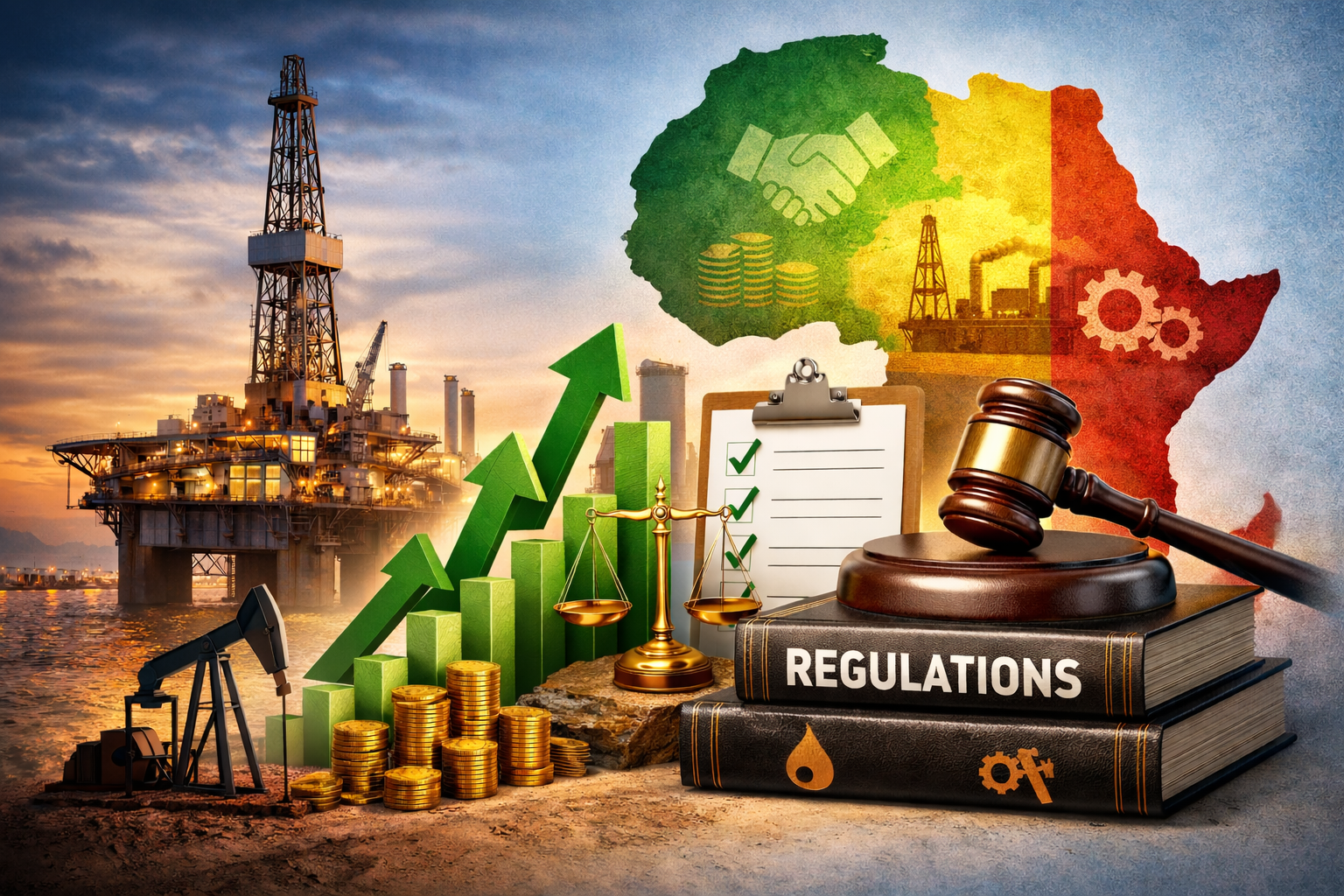
    Regulatory reform has emerged as a key catalyst as Africa’s oil producing countries seek to increase production and attract new capital. Countries such as Angola, Nigeria and the Republic of Congo demonstrate how clear frameworks, transparent licensing and targeted incentives can accelerate investment. As emerging producers emerge across the continent, lessons from Africa’s largest oil and gas market show that the right reforms not only improve governance, but also drive production, investment and measurable results.

    Regulatory restructuring boosts investment

    Angola has been one of the most aggressive reforming countries on the continent, conducting multi-year licensing rounds, establishing a National Oil, Gas and Biofuels Authority, and introducing measures such as a production increase decree. These efforts have stimulated exploration across both frontier and mature basins, enabling new discoveries such as ExxonMobil’s Likenbar-01 and Azul Energy’s Block 1/14 gas discoveries, while also advancing integrated projects such as the Caminho, Agogo, and New Gas consortium gas developments, all of which are critical to sustaining production above 1 million barrels per day (bpd). Supportive policies will create a $70 billion investment pipeline over the next few years, highlighting the role of regulation in advancing national priorities.

    Nigeria also highlights the impact of reforms in scaling up production. The Petroleum Industry Act 2021 (PIA) overhauled the oil and gas sector, streamlined licensing and reduced bureaucracy to restore investor confidence and target 2.5 million barrels per day. Successive licensing rounds in 2024 and 2025 have further increased the market’s attractiveness, with the latest bidding round in November 2025 offering 50 blocks and targeting $10 billion in new investment.

    The Republic of Congo is pursuing similarly ambitious reforms, aiming to increase LNG production to 500,000 barrels per day and 3 million tons per year by 2025. The planned gas master plan, dedicated gas code and new licensing round are strengthening the investment climate. These reforms complement ongoing projects, including Total Energies’ $600 million investment in drilling expansions at Moho Nord, Trident and Perenco, and the second phase of Congo LNG, which began in November 2025. Congo’s regulatory push is designed to maximize production from existing assets while opening opportunities for new market entrants.

    Lessons for emerging producers

    The experience of Africa’s largest oil and gas market provides important guidance for emerging producers. Namibia aims to develop first oil by 2029 through the Total Energy-led Venus project and the Gulp-led Mopane complex, following successful exploration in the Orange Basin offshore. Onshore, ReconAfrica’s discovery of hydrocarbons at Kavango West 1x in December 2025 highlights the country’s growing investment potential. To maintain confidence as we move from exploration to development, Namibia can emulate regional best practices. This means establishing a stable financial regime early, resisting frequent revisions, and ensuring predictable project economics as discoveries move toward commercialization.

    Uganda, with first oil production scheduled for 2026 at the Kingfisher and Tirenga fields, will benefit from lessons from across the region. Alongside the oil field, the 1,443km East Africa Crude Oil Pipeline will link the Lake Albert development to the port of Tanga in Tanzania. The pipeline-led model allows Uganda to leverage Congo’s integrated planning approach, which coordinates upstream, midstream and industrial policies to ensure resource development leads to long-term national value. Efficient permitting, accelerated local content development, and secure infrastructure will be critical during peak construction times.

    As discoveries mature, regulatory frameworks need to evolve from exploration-focused policies to comprehensive strategies for development, commercialization, and export. This is where Africa Energy Week (AEW) 2026 will play a key role. As the continent’s leading policy platform, AEW enables governments, investors and regulators to collaborate on reforms and share lessons learned from across Africa.

    “Africa’s energy future will be built by countries that embrace reform, attract investment and act quickly. When strong policies enable strong projects and regulators, investors and industry work together, more wells will be drilled, more gas commercialized and more opportunities created.” policy clarity, stability and bold decision-making must remain at the heart of Africa’s oil and gas agenda if we want to make history on energy poverty,” said NJ Ayuk, Executive Chairman of the African Energy Chamber.

    African Gas impact Markets Oil reforms
    Share. Facebook Twitter Pinterest LinkedIn Reddit WhatsApp Telegram Email
    Previous ArticlePrivate sector complements government efforts to bridge the digital divide
    Next Article ESG imperatives meet reality: Microgrids power decarbonized sites
    Xsum News
    • Website

    Related Posts

    Centum RE leads the future of East African cities

    June 3, 2026

    How South African cities are rebuilding affordable housing

    June 2, 2026

    Egypt, African Financial Cooperation collaborates with Infinity Power to accelerate green transformation – Economy – Business

    May 15, 2026
    Leave A Reply Cancel Reply

    Top Posts

    African Development Bank Group and Nedbank Group sign multi-billion rand funding partnership to transform housing access and boost African trade

    December 19, 202529 Views

    A United Continent on the Move: Ambassador Kouyateh’s Call for an African Logistics Renaissance

    November 20, 202529 Views

    African Development Fund and WHO collaborate to save Sudan’s health system

    November 17, 202523 Views

    Eni secures multi-million dollar loan for African FLNG project

    January 26, 202622 Views
    Don't Miss
    Construct Africa June 3, 2026

    Glade transforms fragrance into fashion with Make Africa Bloom event

    Glade’s ‘Make Africa Bloom’ event, held at Langham’s Lifestyle Estate, was a fragrant celebration. The…

    Centum RE leads the future of East African cities

    Experts highlight growing health concerns in Africa’s urban areas

    How adaptive reuse can solve urban development challenges

    Stay In Touch
    • Twitter
    • Instagram
    • YouTube
    • LinkedIn
    • TikTok

    Stay Updated.

    Get the latest Africa-focused business & infrastructure news and more directly to your inbox.

    About Us
    About Us

    Xsum News is Africa’s digital window into the future of business. We tell stories of innovation, enterprise, and investment that are shaping the continent’s economic rise. African Business, Added Up.

    X (Twitter) Instagram YouTube LinkedIn TikTok
    Our Picks

    Glade transforms fragrance into fashion with Make Africa Bloom event

    Centum RE leads the future of East African cities

    Experts highlight growing health concerns in Africa’s urban areas

    Most Popular

    African Development Bank praises Algeria’s development model, aims to replicate its success across the continent

    South Africa investigates mystery of plane arriving from Gaza carrying over 150 Palestinians

    ADB and Kabale University announce Sh1 billion incubation center

    © 2026 Xsum News. All Rights Reserved.
    • 🌍 About Xsum News
    • 📬 Contact us
    • Privacy Policy
    • Terms & Conditions
    • Disclaimer

    Type above and press Enter to search. Press Esc to cancel.